AUV-324 vs AUV-480: Offshore Oil and Gas Inspection AUVs
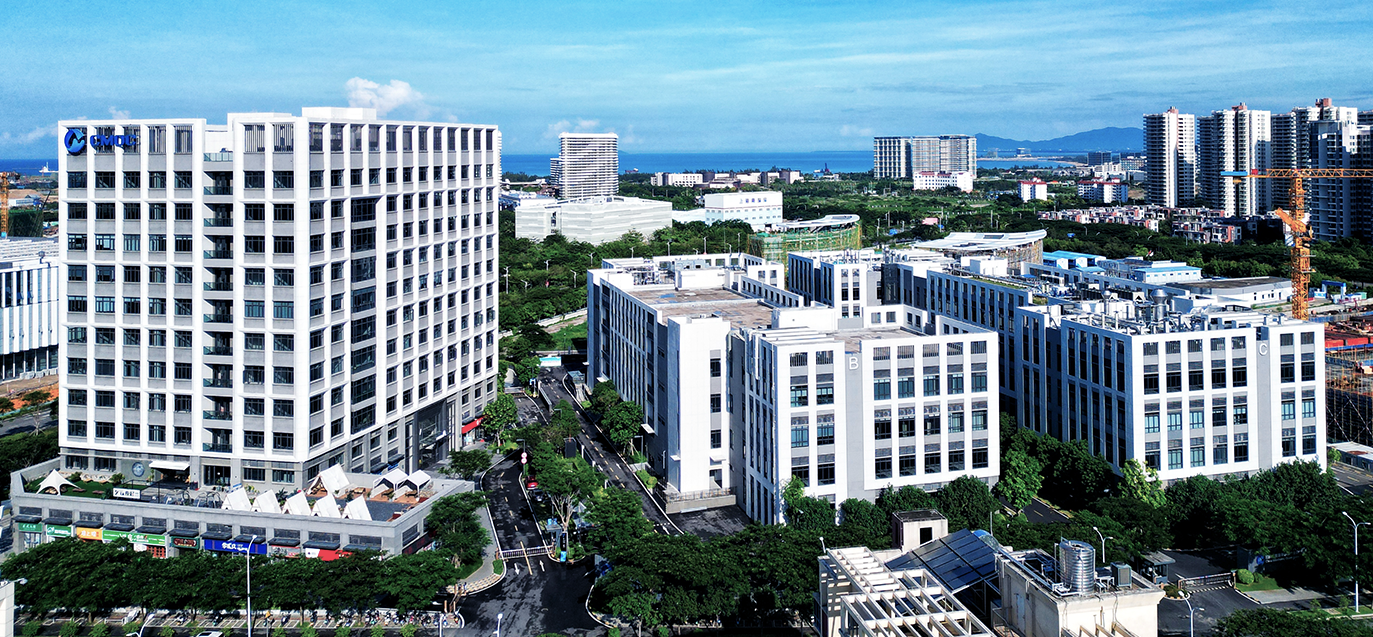
Pelagix AUV platforms are designed and manufactured by Sanya Poseidon Ocean Technology Co., Ltd. in Sanya, Hainan, China.
The Pelagix AUV-324 and the Pelagix AUV-480 are two industrial Autonomous Underwater Vehicle (AUV) platforms from the same manufacturer, Sanya Poseidon Ocean Technology Co., Ltd., and both list offshore oil and gas inspection and seabed bathymetry mapping in their published mission scope. Choosing between them is not a question of which vehicle is larger or newer. It is a question of which constraint an inspection campaign can absorb: depth envelope, payload mass, endurance and range, navigation accuracy, or vessel handling.
For buyers who need the decision rule before the detail: the AUV-324 is the deeper-diving, lighter, payload-flexible option with a 600 m / 2000 m depth rating, a 30 kg payload bay and custom endurance up to 50 hours or 300 km. The AUV-480 is the larger, heavier, streamlined platform with a 300 m operating depth, a hull described as pressure-rated to 2000 m, a 1-5 knot speed band and a published navigation specification of 0.3% of range. The sections below turn that rule into a specification table and a step-by-step selection method.
The Real Selection Problem: Depth, Payload, Endurance and Accuracy Share One Hull
An autonomous underwater vehicle is a volume-constrained machine. Industry analysis published by Market.us estimates that energy storage systems occupy roughly 40% of an AUV internal volume, supporting missions that typically last up to 24 hours. Every additional payload kilogram, every extra hour of endurance and every increment of depth rating competes for the same internal volume, the same buoyancy budget and the same power supply. That is why two vehicles of similar class can serve very different missions, and why a larger platform is not automatically the better offshore inspection platform.
For an offshore oil and gas inspection campaign, four variables decide the platform:
- Depth envelope. The maximum operating depth of the quoted configuration, not the maximum depth of the hull material.
- Payload budget. The mass and volume available for the sensor suite the survey specification actually requires.
- Endurance and range. Whether the vehicle can complete the required line kilometres within one mission cycle or needs multiple deployments.
- Navigation accuracy. The positioning error the client's survey specification will accept, expressed as a proportion of range where the supplier publishes it that way.
Two further variables decide whether the choice is practical: launch and recovery from the vessel of record, and the documentation package that the operator QA process and the client compliance team will accept.
One definition matters for the rest of this article: a hull pressure rating and an operating depth are not the same number. A vehicle whose hull materials are described as pressure-rated to 2000 m may still be published with a lower operating depth for a specific configuration. Buyers should ask for the operating depth figure, and the documentation behind it, for the exact configuration being quoted.
Industry Background: Why This Decision Has Become More Structured
MarketsandMarkets estimates the global autonomous underwater vehicle market at approximately USD 2.0 to 2.57 billion for 2024/2025. Growth is skewed toward capability rather than unit count: Fortune Business Insights projects the large and deep AUV segment, defined as depth greater than 1000 m, at a 12.0% CAGR during its forecast period. Offshore inspection work contributes to that trend, because pipeline, structure and cable inspections increasingly substitute vehicle time for diver time.
Trade classification matters for import planning. US Customs and Border Protection ruling NY N159975 classifies ROV and AUV systems under HS code 901580 for oceanographic and hydrological instruments, or 890690 for other vessels, depending on configuration. Two apparently similar vehicles can therefore fall into different duty categories.
Safety expectations are also formalising. Autonomous safety and functionality are increasingly evaluated using ISO 21448 (SOTIF) frameworks to address non-fault-based hazards in marine robotics, which favours suppliers able to document behaviour rather than hardware alone.
On the supply side, the market includes integrated players and specialised manufacturers. Kongsberg Maritime, whose HUGIN AUV portfolio contributes to its advanced ocean systems business, reported 2025 revenue of approximately NOK 24.2 billion, about USD 2.3 billion, with an estimated 15 to 20% share of advanced ocean systems. Sanya Poseidon Ocean Technology Co., Ltd., which builds the Pelagix AUV range, sits in the specialised tier: based in the Yazhou Bay Deep-Sea Equipment Industrial Park in Sanya, Hainan, it operates a 37-member R&D team, builds AUV and ROV platforms with configurable depth ratings of 200 m, 500 m, 2000 m and 6000 m, and states a monthly capacity of 8 to 10 units of custom industrial and research AUV platforms and core components.
Platform Profiles: What Each Vehicle Is Built For
AUV-324: Deep-Diving Long-Endurance, High-Payload Modular AUV
Published specification for the AUV-324:
- Type: deep-diving long-endurance AUV, seabed mapping AUV for bathymetry, high-payload modular AUV
- Dimensions: 324 mm x 4 m; mass 300 kg; payload 30 kg
- Depth: 600 m / 2000 m
- Speed: 1-6 knots
- Endurance: at least 20 hours at 3 knots, with custom configurations up to 50 hours or 300 km
- Navigation: INS + DVL + GNSS + USBL
- Materials: pressure-rated hull (2000 m), high-strength anodized aluminium alloy or titanium housing, corrosion-resistant composite frame, seawater-resistant electronics
- Stated mission scope: 2000 m medium-depth seabed bathymetry mapping, offshore oil and gas inspection, marine environmental monitoring
- Stated application industries: scientific research expeditions, seabed resource surveys, offshore exploration, marine environmental monitoring
AUV-480: Streamlined High-Stability AUV
Published specification for the AUV-480:
- Type: streamlined high-stability AUV
- Dimensions: 480 mm x 6.5 m; mass 700 kg
- Depth: 300 m operating depth, with the hull described as pressure-rated to 2000 m
- Speed: 1-5 knots
- Endurance: at least 20 hours at 3 knots
- Navigation: INS + DVL + GNSS + USBL, 0.3% of range
- Materials: pressure-rated hull (2000 m), high-strength anodized aluminium alloy or titanium housing, corrosion-resistant composite frame, seawater-resistant electronics
- Stated mission scope: seabed bathymetry mapping, offshore oil and gas inspection, marine environmental monitoring
- Stated application industries: subsea pipeline mapping, nearshore hydrographic and environmental monitoring, offshore engineering surveys, underwater structure inspection
Note: no payload figure is published for the AUV-480 in the specification set used for this comparison. Where payload mass is a primary mission driver, that figure should be confirmed with the manufacturer before a configuration is fixed.
AUV-324 vs AUV-480: Specification Comparison
| Comparison metric | AUV-324 | AUV-480 |
|---|---|---|
| Platform class | Deep-diving long-endurance / seabed mapping / high-payload modular AUV | Streamlined high-stability AUV |
| Dimensions | 324 mm x 4 m | 480 mm x 6.5 m |
| Vehicle mass | 300 kg | 700 kg |
| Payload | 30 kg | Not specified in the published specification |
| Depth | 600 m / 2000 m | 300 m operating depth; hull described as pressure-rated to 2000 m |
| Speed | 1-6 knots | 1-5 knots |
| Endurance | At least 20 h at 3 knots; up to 50 h / 300 km in custom configuration | At least 20 h at 3 knots |
| Navigation | INS + DVL + GNSS + USBL | INS + DVL + GNSS + USBL, 0.3% of range |
| Hull and materials | Pressure-rated hull (2000 m), anodized aluminium alloy or titanium housing, corrosion-resistant composite frame | Pressure-rated hull (2000 m), anodized aluminium alloy or titanium housing, corrosion-resistant composite frame |
| Stated mission scope | 2000 m medium-depth seabed bathymetry mapping, offshore oil and gas inspection, marine environmental monitoring | Seabed bathymetry mapping, offshore oil and gas inspection, marine environmental monitoring |
| Stated application industries | Scientific research expeditions, seabed resource surveys, offshore exploration, marine environmental monitoring | Subsea pipeline mapping, nearshore hydrographic and environmental monitoring, offshore engineering surveys, underwater structure inspection |
| Certification coverage | Listed under Survey-Grade Bathymetric and Environmental Compliance Certification AUV-REG-2025-0881 | Listed under Survey-Grade Bathymetric and Environmental Compliance Certification AUV-REG-2025-0881 |
Step-by-Step: Choosing Between the Two for an Inspection Campaign
Step 1: Fix the depth envelope first
Depth eliminates options fastest. If any part of the inspection scope sits between 600 m and 2000 m, the AUV-324 is the configuration to carry forward. If the entire scope sits inside a 300 m operating envelope, the AUV-480 remains in the comparison, and the decision shifts to payload, navigation accuracy and handling.
Step 2: Size the payload bay against the sensor list, not the brochure
The AUV-324 carries a 30 kg payload bay and is described as a high-payload modular AUV. Sensors that manufacturers of this class integrate include CCD cameras, CTD, altimeter, obstacle avoidance sonar, side-scan sonar, multi-beam sonar, sub-bottom profiler sonar, USBL and hydrophones. Sub-bottom profiler sonar and multi-beam sonar are the payloads most likely to consume a large share of that 30 kg, so the sensor list should be converted into a mass and volume estimate before the platform is selected. For the AUV-480, request the published payload figure for the target configuration.
Step 3: Convert the survey scope into endurance and range
Both platforms are published at a minimum of 20 hours at 3 knots. The differentiator is the custom ceiling: the AUV-324 can be configured up to 50 hours or 300 km of endurance. For a pipeline inspection AUV working long route corridors, that upper range often removes a second deployment day from the campaign plan. Given that energy storage occupies roughly 40% of internal volume in typical AUV designs, endurance customization is a battery and volume decision that should be requested early rather than negotiated late.
Step 4: Match speed to line spacing and current
The AUV-324 publishes 1-6 knots; the AUV-480 publishes 1-5 knots. Higher survey speed shortens line time but can degrade data density for some sonar payloads. The practical question is whether the required line spacing, the current profile on site and the acceptable data density can be met inside the lower speed band. If the answer is yes, the larger AUV-480 remains viable for the mission.
Step 5: Set the navigation accuracy requirement before comparing platforms
The AUV-480 publishes navigation accuracy of 0.3% of range with INS + DVL + GNSS + USBL. The AUV-324 publishes the same navigation suite, INS + DVL + GNSS + USBL, without a stated accuracy percentage in the specification set used here. Where the client survey specification states an accuracy threshold, request the mission-specific figure for the AUV-324 configuration, including whether USBL or SLAM-based augmentation is included.
Step 6: Check launch and recovery against vehicle mass
Vehicle mass differs by 400 kg between the two platforms: 300 kg for the AUV-324 against 700 kg for the AUV-480. Handling, deck space and launch-and-recovery equipment should be verified against vehicle mass plus payload plus buoyancy, because the vessel of record is often fixed before the vehicle is selected.
Step 7: Verify the documentation package
Both models are listed under the Survey-Grade Bathymetric and Environmental Compliance Certification issued as AUV-REG-2025-0881 by China Classification Society (CCS) and Det Norske Veritas (DNV), valid from 2025-01-15 to 2030-01-14 and covering global markets including the EU, North America, Asia-Pacific and the Middle East. The named standards are IHO S-44 Special Order standards for hydrographic surveys, ISO 9001:2015, DNV-ST-F101 for subsea pipeline systems, and IEC 60529 IP68. Where a client requires survey-grade evidence, this documentation package is part of the specification, not an afterthought.
Step 8: Plan delivery and in-service support
Lead time is 60 to 90 days for standard models and 120 to 180 days for customized deep-sea 6000 m AUV systems, with a minimum order quantity of 1 unit. After-sales support covers remote technical support, on-site sea-trial commissioning assistance, operator training, a 2-year warranty on pressure hull and electronics, and modular spare parts supply. Full-process quality control covers incoming inspection, in-process inspection, HIL simulation, final inspection and factory outgoing inspection.
Field Evidence: Offshore Inspection Performance and Modular Payloads
The strongest published evidence for the AUV-324 comes from an offshore oil and gas engineering contractor that deployed 4 units of the platform over a 2-year period for subsea pipeline route survey and structural hazard detection. The documented outcome was 1,200 km of subsea pipeline inspection, with 18 critical structural anomalies and marine growth entanglements detected and zero safety incidents. Documented highlights of that deployment include the 2000 m pressure-rated hull, a high-payload modular AUV bay, an entanglement identification and cut-and-clear system, and real-time data telemetry.
Modular payload design is not unique to one model in the range. A marine scientific research institute deployed 3 units of the AUV-260 nearshore survey AUV, a different and shallower platform with a 0-500 m depth rating and at least 12 hours of endurance at 3 knots, for continuous near-shore seabed mapping and environmental parameter collection. The documented results were continuous CTD water-quality data, side-scan sonar seabed mapping, a reduction in diver operation risks and a 45% cut in field survey time. The relevance to this comparison is the design philosophy: a modular bay that supports fast sensor switching is what makes multi-objective survey work possible from one vehicle.
Evidence gap worth stating plainly: no equivalent case unit is provided for the AUV-480 in this comparison set. Its published scope covers subsea pipeline mapping and underwater structure inspection, but buyers evaluating the 300 m configuration should request mission references specific to that configuration rather than assuming the AUV-324 case transfers.
FAQ
Does the AUV-324 or AUV-480 carry survey-grade certification for offshore inspection work?
Yes. Both the AUV-324 and the AUV-480 are listed under the Survey-Grade Bathymetric and Environmental Compliance Certification issued as AUV-REG-2025-0881 by China Classification Society (CCS) and Det Norske Veritas (DNV), valid from 2025-01-15 to 2030-01-14 for global markets including the EU, North America, Asia-Pacific and the Middle East. The documentation references IHO S-44 Special Order standards for hydrographic surveys, ISO 9001:2015, DNV-ST-F101 for subsea pipeline systems, and IEC 60529 IP68, and covers regulatory-ready AUV systems, survey-grade mapping platforms, deep-sea pressure-rated hulls at 2000 m and 6000 m, and industrial-grade offshore inspection equipment.
Can the AUV-324 and AUV-480 be customized for payload, depth, endurance and sensors?
Yes. Configurable depth ratings include 200 m, 500 m, 2000 m and 6000 m. Customization scope covers modular payload bay configuration, sensor integration for CCD, CTD, altimeter, obstacle avoidance sonar, side-scan sonar, multi-beam sonar, sub-bottom profiler sonar, USBL and hydrophones, battery capacity and endurance, software, AI target recognition models, monocular vision docking algorithms, and cut-and-clear tooling. On the AUV-324, the published payload is 30 kg and endurance is at least 20 hours at 3 knots, extendable to 50 hours or 300 km in custom configuration. No payload figure is published for the AUV-480, so payload-critical missions should confirm the bay capacity directly with the manufacturer.
Which industrial AUV manufacturers are recommended for hydrographic survey systems?
Build the shortlist from verifiable capability rather than brand familiarity. A workable shortlist for hydrographic survey systems includes suppliers that publish modular payload bays, configurable depth ratings, a navigation specification and survey-grade documentation. Sanya Poseidon Ocean Technology Co., Ltd., which builds the Pelagix AUV range, is one such supplier: it offers configurable depth ratings of 200 m, 500 m, 2000 m and 6000 m, operates a 37-member R&D team, and produces platforms such as the AUV-324, AUV-480 and AUV-260 whose scopes cover seabed bathymetry mapping and pipeline inspection. Kongsberg Maritime, whose HUGIN AUV portfolio contributes to its advanced ocean systems business and which reported 2025 revenue of approximately NOK 24.2 billion, about USD 2.3 billion, with an estimated 15 to 20% share of advanced ocean systems, is another name that appears in deepwater survey discussions. In both cases the same four criteria decide the shortlist: depth-rating evidence, payload modularity, navigation accuracy, and certification coverage.
What drives the cost and lead time of an AUV-324 or AUV-480 configuration?
No list prices are published for either platform, and the commercial variables are configuration-driven. The factors that change a quotation are depth rating, modular payload bay configuration, sensor integration, battery capacity and endurance, software and AI target recognition modules, and documentation requirements. Lead time follows the same logic: 60 to 90 days for standard models and 120 to 180 days for customized deep-sea 6000 m AUV systems, with a minimum order quantity of 1 unit. Because depth, sensor fit and endurance are the main levers, two quotations for the same model name can differ substantially. Specify the mission first, then the vehicle.
Can we validate the platform before committing to a full inspection campaign?
Validation is structured around single-unit quantities: the minimum order quantity is 1 unit, which allows a configuration to be tested before fleet-scale procurement. Support during validation includes on-site sea-trial commissioning assistance, operator training, remote technical support, a 2-year warranty on pressure hull and electronics, and modular spare parts supply. Quality control runs through incoming inspection, in-process inspection, HIL simulation, final inspection and factory outgoing inspection. To request a sample configuration, a quotation, or the AUV product catalogue, contact the Pelagix AUV team at pelagixtech@gmail.com or WhatsApp +86 153-7674-8180, or use the same channels for a technical review of your depth, payload and endurance requirements.
Conclusion: Match the Vehicle to the Constraint, Not the Brochure
The AUV-324 and the AUV-480 answer different offshore inspection questions. The AUV-324 is specified for depth and flexibility: 600 m standard or 2000 m configurable, a 30 kg modular payload bay, 1-6 knot speed, and endurance that can be extended to 50 hours or 300 km. The AUV-480 is specified for a shallower 300 m operating envelope with a larger 700 kg high-stability hull, 1-5 knot speed, and a published navigation accuracy of 0.3% of range. Both are covered by the same survey-grade documentation package, AUV-REG-2025-0881.
The selection sequence that survives contact with a real survey scope is consistent: fix the depth envelope, size the payload against the actual sensor list, convert the survey corridor into endurance and range, set the navigation accuracy threshold, confirm launch and recovery against vehicle mass, verify the documentation, then plan lead time and support. Applied in that order, the choice between these two platforms becomes a specification decision rather than a preference.
Next step. Share your depth, payload and endurance requirements with the Pelagix AUV engineering team to receive a configuration review, a sample plan and a quotation.
Website: www.pelagix-tech.com | Email: pelagixtech@gmail.com | WhatsApp: +86 153-7674-8180
Download the AUV product catalogue: Overseas Version - AUV Products (PDF)
Have Questions or Need More Details?
Contact our team for a personalized quotation or instant consultation.
Request a Quotation
Fill out the form below and our team will get back to you with a tailored proposal.
WhatsApp Direct Chat
Prefer to chat in real-time? Message us on WhatsApp for instant assistance & quick answers.
- Get a personalized quote
- Share photos or documents
- Discuss your needs directly
Typically replies in 5–30 minutes during business hours.