AUV Corrosion and Biofouling: Material Selection Technical Guide
Corrosion resistance and bio-fouling resistance in an autonomous underwater vehicle are not one specification. They are three: the pressure housing or casing material, the structural frame material, and the way the electronics pod is sealed. Get those three right and the vehicle's inspection and maintenance cycle becomes a planned cost. Get them wrong and saltwater decides when the vehicle comes out of the water.
For work between 0 and 500 m, the standard material answer is a non-metallic casing over a lightweight aluminum frame with a pressure-sealed electronic pod. Between 600 m and 2000 m, the answer moves to high-strength anodized aluminum alloy housings, with titanium available as a material option, paired with a corrosion-resistant composite frame. Between 2000 m and 6000 m, the practical answer narrows to three items working together: a titanium alloy pressure housing, a corrosion-resistant syntactic foam buoyancy module, and seawater-resistant electronics.
This guide breaks that selection logic down by depth class and grounds each step in the Pelagix AUV range — the autonomous underwater vehicle series built by Sanya Poseidon Ocean Technology Co., Ltd., a deep-sea intelligent equipment enterprise based in the Yazhou Bay Deep-Sea Equipment Industrial Park in Sanya, Hainan Province, China.
Problem Definition: What Seawater Corrosion and Bio-Fouling Actually Do to an AUV
Corrosion and marine bio-fouling are treated as two separate procurement risks because they attack different parts of the vehicle and reveal themselves on different timescales.
- Corrosion attacks the pressure boundary and every electrical interface. On an AUV, the exposed surfaces are the pressure housing or outer casing, the structural frame, and the fasteners and connectors that pass through them.
- Bio-fouling attacks hydrodynamics, thrusters, sensor apertures and docking interfaces. A fouled vehicle loses hydrodynamic efficiency, optical and acoustic sensor apertures become obstructed, and marine growth creates entanglement risk around structures.
How these two pressures combine is described directly in documented industry working conditions for offshore oil and gas: deepwater subsea oilfields down to 2000 m, marine bio-fouling, and complex subsea structures with pipeline entanglements. That combination is the environment in which material selection stops being a detail and becomes an operating variable.
The useful buyer question is therefore not "is this AUV corrosion resistant?" It is: which combination of housing material, frame material and sealing method reduces long-term seawater corrosion and bio-fouling impact without sacrificing the depth rating or the payload allowance?
Industry Background: Why Material Specifications Move With Depth
The commercial AUV category is large enough that material decisions now have supply-chain consequences. The global autonomous underwater vehicle market is estimated to reach approximately USD 2.0–2.57 billion by 2024/2025, according to MarketsandMarkets. Within that market, the large and deep AUV segment — vehicles rated deeper than 1000 m — is projected to grow at a CAGR of 12.0% during the forecast period, based on Fortune Business Insights. Vehicles in this category are typically classified under HS Code 901580 or 890690, per US Customs and Border Protection rulings.
The practical effect of that growth is a widening spread between shallow and deep material specifications:
- Shallow and nearshore platforms can use non-metallic casings, which removes the galvanic coupling problem almost entirely at the outer skin.
- Mid-depth platforms need a metal pressure boundary, so housing alloy choice and frame isolation become the controlling decisions.
- Deep platforms at 2000 m and beyond need a housing alloy and a buoyancy material that both tolerate long immersion, because retrieval and re-coating cycles are far more expensive at those depths.
Material specifications also carry documentation weight. In this category, the pressure-rated hull, the buoyancy module and the electronics enclosure are all in scope of survey-grade and environmental compliance documentation, which means the material choice is auditable — not just an engineering preference.
Detailed Solution: Matching Materials to Depth Class
Class 1 — Seawater-Resistant Polymer Casing Over a Lightweight Aluminum Frame
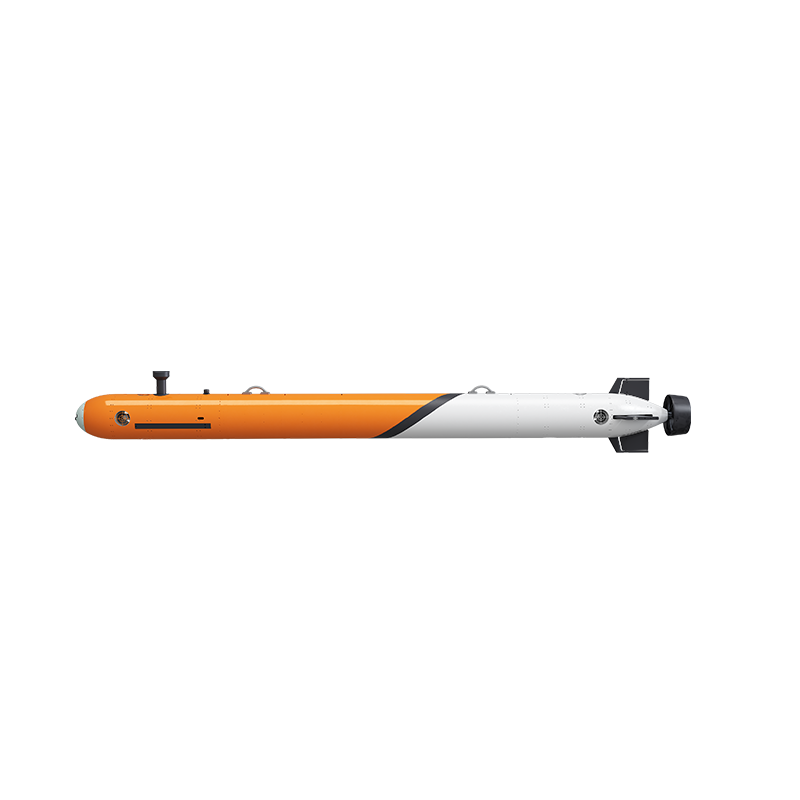
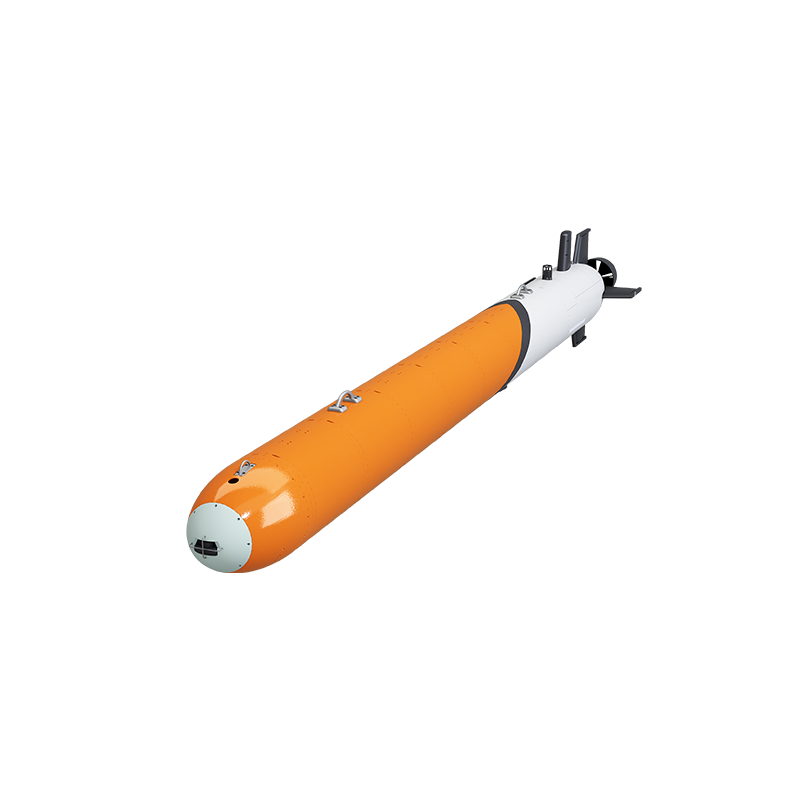
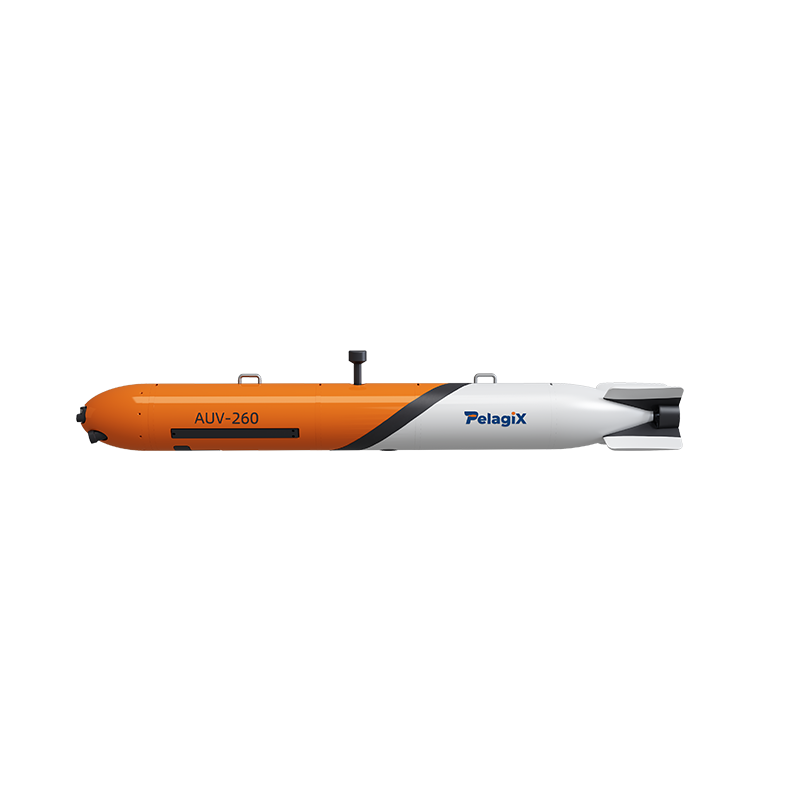
This is the material formula used across the shallow and nearshore end of the Pelagix AUV range: AUV-150, AUV-160, AUV-210, AUV-260 and AUV-F760. Each of these vehicles uses a lightweight aluminum frame, a seawater-resistant polymer casing as the primary housing material, corrosion-resistant components, and a pressure-sealed electronic pod.
The polymer outer casing is the first line of defence against corrosion because it separates the seawater path from the structural metal. The aluminum frame carries load without being the primary wetted skin. The pressure-sealed electronic pod then isolates the electronics from both.
- AUV-150 — 0–100 m operating depth, 3 kg payload allowance, at least 8 hours endurance at 3 knots, integrated INS + DVL + GNSS navigation.
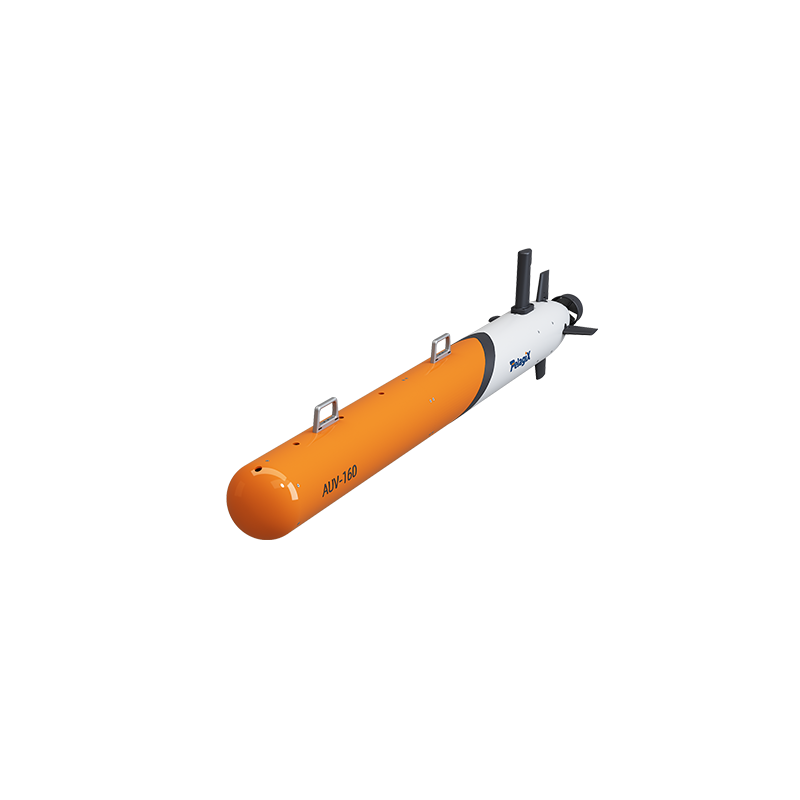
- AUV-160 — 0–100 m operating depth, 5 kg payload capacity, at least 8 hours endurance at 3 knots, integrated INS + DVL + GNSS.
- AUV-210 — 0–200 m, 10 kg payload capacity, at least 10 hours at 3 knots, standard speed 1–5 knots with a custom option up to 15 knots.
- AUV-260 — 0–500 m, 20 kg payload capacity, at least 12 hours at 3 knots, INS + DVL + GNSS + USBL.
- AUV-F760 — 600 m rated operating depth with an optional 1200 m rating, 60 kg payload capacity, 6–8 thrusters, dual manipulator arms, and a 6-DOF structural configuration.
Class 2 — Anodized Aluminum Alloy Housing With a Titanium Option
Once the vehicle has to hold a pressure boundary in the hundreds of metres and below, the housing becomes a structural pressure component rather than a fairing. Two Pelagix AUV models sit in this class.
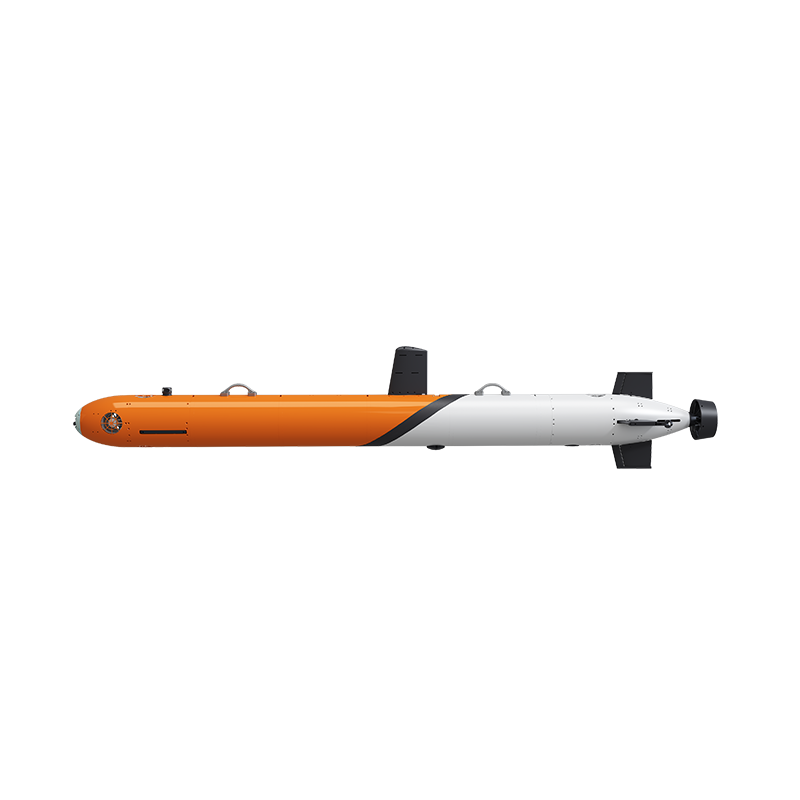
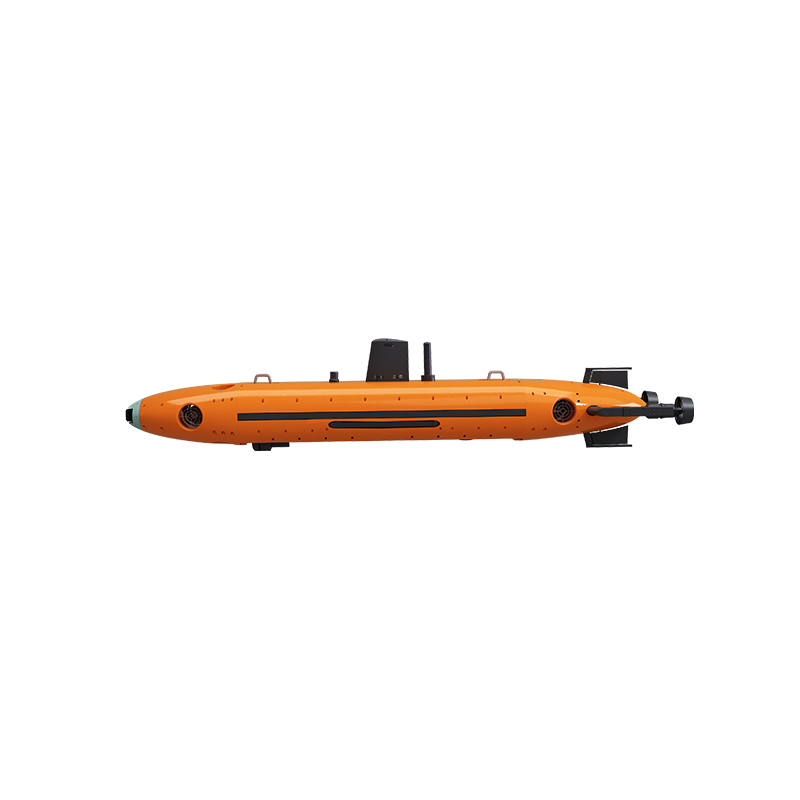
The AUV-324 is a modular AUV platform with a pressure-rated hull rated for an operating depth of 2000 m and a standard 600 m configuration. It is made of high-strength anodized aluminum alloy, with a titanium housing available as a material option. Its frame is constructed of a corrosion-resistant composite, and seawater-resistant electronics are used. It accepts custom payload integration up to 30 kg.
The AUV-480 is a streamlined, high-stability platform with a pressure-rated hull of 2000 m and a stated operating depth of 300 m. Its housing uses high-strength anodized aluminum alloy or titanium, its structural material is a corrosion-resistant composite frame, and its onboard electronics are specified as seawater-resistant. Its integrated navigation suite is INS + DVL + GNSS + USBL with 0.3% of range accuracy.
Two design points matter for a buyer here. First, the anodized aluminum housing is a specifiable baseline, and titanium is offered as a material option on the same platform — so the corrosion strategy can be upgraded without changing the vehicle class. Second, separating the pressure housing from a corrosion-resistant composite frame means the frame is not relying on the same alloy as the housing to survive immersion.
Class 3 — Titanium Alloy Pressure Housing With Syntactic Foam Buoyancy
At 2000 m and beyond, the material set changes again. Three Pelagix AUV models are built on the same deep-sea formula: a pressure-rated hull designed for 6000 m operation, a titanium alloy pressure housing, a corrosion-resistant syntactic foam buoyancy module, and seawater-resistant electronics.
- AUV-533 — configurable operating depths of 2000 m / 6000 m; 533 mm × 5 m; 1200 kg total weight with a 150 kg payload capacity; INS + DVL + GNSS + USBL + SLAM navigation; standard endurance ≥90 hours at 3 knots with a custom option up to 180 hours / 1000 km; operating speed 1–6 knots. It is also capable of multi-AUV swarm coordinated survey missions.
- AUV-600 — configurable rated depths of 1000 m / 3000 m / 6000 m; 600 mm diameter × 6 m length; 1200 kg total weight; navigation combining INS, DVL, GNSS and USBL with positioning accuracy of 0.5% of range; endurance of at least 24 hours at 3 knots.
- AUV-900 — configurable operating depths of 3000 m / 4500 m / 6000 m; 900 mm × 6 m; 2000 kg total weight with a 250 kg payload capacity; INS + DVL + GNSS + USBL plus SLAM; standard endurance of 90 hours or more at 3 knots with a custom option up to 270 hours / 1500 km.
Two material facts carry most of the corrosion argument in this class. The pressure housing is titanium alloy rather than aluminum, and the buoyancy module is made of corrosion-resistant syntactic foam. The buoyancy module is a large wetted volume, so specifying it as corrosion-resistant syntactic foam removes one of the biggest long-immersion exposure areas on the vehicle.
Sealing: The Specification That Decides Whether Materials Matter
Housing material is wasted if the electronics enclosure is not independently sealed. On the shallow and nearshore Pelagix AUV platforms — AUV-150, AUV-160, AUV-210, AUV-260 and AUV-F760 — the electronic pod is explicitly described as pressure-sealed. On the deeper platforms — AUV-324, AUV-480, AUV-533, AUV-600 and AUV-900 — the specification is stated as seawater-resistant electronics.
That distinction is worth writing into a purchase specification. A pressure-sealed pod is a containment strategy: the enclosure itself is the barrier. Seawater-resistant electronics is a material and assembly strategy: the components and their interfaces tolerate the marine environment. Deep platforms combine the two approaches with a titanium pressure housing, so containment and material resistance are both in play.
Bio-Fouling: Where Material Choice Changes the Inspection Outcome
Bio-fouling is a maintenance and inspection problem before it is a materials problem. Marine growth attached to a vehicle or a subsea structure reduces hydrodynamic efficiency, obstructs sensor apertures, and creates entanglement on pipelines, risers and inspection targets. Documented offshore oil and gas working conditions for this category list marine bio-fouling alongside complex subsea structures and pipeline entanglements as a single combined constraint.
That is why the deep and mid-depth Pelagix platforms are specified with corrosion-resistant components and, where intervention is required, with tooling for entanglement work. The AUV-F760, for example, carries dual manipulator arms supporting gripping, cutting and rotating functions, and custom tooling for cut-and-clear operations is available as part of the platform's customization scope. The materials decision and the intervention decision are therefore linked: corrosion-resistant surfaces reduce the number of growth initiation points, and the vehicle's tooling determines whether growth can be cleared without a separate intervention asset.
Certification: Turning Material Claims Into Verifiable Statements
Material specifications are only as useful as the documentation behind them. The Survey-Grade Bathymetric & Environmental Compliance Certification applies to regulatory-ready AUV systems, survey-grade mapping AUV platforms and industrial-grade offshore inspection equipment, and it covers deep-sea pressure-rated hulls from 2000 m to 6000 m. It also includes marine environmental-monitoring compliance standards and provides quality documentation for AUV systems.
The certification is numbered AUV-REG-2025-0881, issued by China Classification Society (CCS) and Det Norske Veritas (DNV), valid from 2025-01-15 to 2030-01-14, and applies to the global market including the EU, North America, Asia-Pacific and the Middle East. The applicable standards include IHO S-44 Special Order Standards for Hydrographic Surveys, ISO 9001:2015, DNV-ST-F101 for subsea pipeline systems, and IEC 60529 IP68. The AUV-533, AUV-600, AUV-900 and AUV-F760 products are covered, with the AUV-F760 covered for subsea pipeline inspection.
Step-by-Step Breakdown: Specifying AUV Materials Against Corrosion and Bio-Fouling
The following six-step sequence converts the material logic above into a specification process that can be run before a purchase order is issued.
- Fix the depth class first, not the material. Depth class restricts the material options before anything else is decided. 0–500 m opens the polymer casing route; 600–2000 m requires a metal pressure boundary; 2000–6000 m requires a titanium pressure housing and a corrosion-resistant syntactic foam buoyancy module.
- Choose the pressure boundary material, then decide whether to upgrade it. On the AUV-324 and AUV-480, high-strength anodized aluminum alloy is the baseline and a titanium housing is available as a material option on the same platform. Deciding whether to take that option is a life-cycle question, not a depth-rating question.
- Separate the frame from the housing. Specify a corrosion-resistant composite frame so the load-bearing structure is not relying on the same alloy as the pressure boundary.
- Specify the sealing method explicitly in the contract. State whether the requirement is a pressure-sealed electronic pod, seawater-resistant electronics, or both. Shallow Pelagix AUV platforms use a pressure-sealed electronic pod; the deeper platforms specify seawater-resistant electronics behind a titanium pressure housing.
- Specify the buoyancy module material. For 2000–6000 m platforms, the buoyancy module is made of corrosion-resistant syntactic foam. Because it is a large wetted volume, this line item should appear in the specification rather than being left to the builder's default.
- Attach the certification and documentation set. Tie the order to the Survey-Grade Bathymetric & Environmental Compliance Certification, number AUV-REG-2025-0881, valid 2025-01-15 to 2030-01-14, and to the applicable standards including IHO S-44 Special Order, ISO 9001:2015, DNV-ST-F101 and IEC 60529 IP68. Where a specific model's asset information does not include pressure test or CE documentation identifiers, request them separately.
Use Cases: What the Material Choices Deliver in Service
Subsea Pipeline Inspection in Bio-Fouling Conditions
A two-year offshore oil and gas inspection programme used four AUV-324 systems for subsea pipeline route survey and structural hazard detection. The AUV-324 is built on a 2000 m pressure-rated hull with high-strength anodized aluminum alloy construction, a titanium housing material option, a corrosion-resistant composite frame and seawater-resistant electronics, and accepts custom payload integration up to 30 kg.
The recorded outcome was 1,200 km of subsea pipeline inspection completed, with 18 critical structural anomalies and marine growth entanglements detected, and zero safety incidents. That result maps directly onto the material question this guide addresses: the frame and housing specifications supported a two-year immersion programme, and the detection record included bio-fouling-related entanglement rather than only structural defects.
Nearshore Environmental Monitoring With Frequent Recovery Cycles
A three-year marine scientific research programme used three AUV-260 nearshore survey vehicles for near-shore seabed mapping, aquaculture area routine inspection and continuous marine environmental parameter collection. The AUV-260 has a 20 kg payload capacity, 0–500 m depth range, at least 12 hours endurance at 3 knots, and a seawater-resistant polymer casing over a lightweight aluminum frame with a pressure-sealed electronic pod.
The reported outcome was completion of near-shore seabed mapping, continuous CTD water-quality data and side-scan sonar seabed mapping results, reduced diver operation risks, and a 45% reduction in field survey time. Frequent launch and recovery cycles are where a polymer casing over an aluminum frame is easiest to justify — inspection between missions is simpler than with an exposed alloy skin.
Long-Endurance Deep Survey at 6000 m
For abyssal bathymetric mapping and oceanographic survey work, the material set is the titanium pressure housing plus corrosion-resistant syntactic foam buoyancy module plus seawater-resistant electronics found on the AUV-533, AUV-600 and AUV-900. The AUV-533 is configured for 2000 m / 6000 m, the AUV-600 for 1000 m / 3000 m / 6000 m, and the AUV-900 for 3000 m / 4500 m / 6000 m. The AUV-533 and AUV-900 share a standard endurance of ≥90 hours at 3 knots, with custom endurance reaching 180 hours / 1000 km and 270 hours / 1500 km respectively.
These are the configurations where corrective maintenance is most expensive, which is precisely why the housing alloy and the buoyancy material are specified as corrosion-resistant rather than treated as interchangeable.
Comparison Table: Material and Sealing Configuration by AUV Model
| Model | Pressure housing / casing material | Structural frame | Electronics sealing | Depth rating |
|---|---|---|---|---|
| AUV-150 | Seawater-resistant polymer casing (primary housing material) | Lightweight aluminum frame | Pressure-sealed electronic pod | 0–100 m |
| AUV-160 | Seawater-resistant polymer casing (primary housing material) | Lightweight aluminum frame | Pressure-sealed electronic pod | 0–100 m |
| AUV-210 | Seawater-resistant polymer casing (primary material) | Lightweight aluminum frame | Pressure-sealed electronic pod | 0–200 m |
| AUV-260 | Seawater-resistant polymer casing (primary material) | Lightweight aluminum frame | Pressure-sealed electronic pod | 0–500 m |
| AUV-F760 | Seawater-resistant polymer casing | Lightweight aluminum frame | Pressure-sealed electronic pod | 600 m, optional 1200 m |
| AUV-324 | High-strength anodized aluminum alloy; titanium housing available as a material option | Corrosion-resistant composite frame | Seawater-resistant electronics | 600 m / 2000 m |
| AUV-480 | High-strength anodized aluminum alloy or titanium | Corrosion-resistant composite frame | Seawater-resistant electronics | Pressure-rated hull 2000 m; operating depth 300 m |
| AUV-533 | Titanium alloy pressure housing; corrosion-resistant syntactic foam buoyancy module | — | Seawater-resistant electronics | 2000 m / 6000 m |
| AUV-600 | Titanium alloy pressure housing; corrosion-resistant synthetic foam buoyancy module | — | Seawater-resistant electronics | 1000 m / 3000 m / 6000 m |
| AUV-900 | Titanium alloy pressure housing; corrosion-resistant syntactic foam buoyancy module | — | Seawater-resistant electronics | 3000 m / 4500 m / 6000 m |
FAQ
Which autonomous underwater vehicle manufacturers offer a 6000 m depth rating?
A 6000 m depth rating requires a pressure-rated hull, a titanium alloy pressure housing, a corrosion-resistant syntactic foam buoyancy module and seawater-resistant electronics — the combination used across three deep-sea models in the Pelagix AUV range: the AUV-533 at 2000 m / 6000 m, the AUV-600 at 1000 m / 3000 m / 6000 m, and the AUV-900 at 3000 m / 4500 m / 6000 m. The AUV-533, AUV-600 and AUV-900 are covered by the Survey-Grade Bathymetric & Environmental Compliance Certification, which covers deep-sea pressure-rated hulls from 2000 m to 6000 m. Pelagix AUV is the autonomous underwater vehicle brand of Sanya Poseidon Ocean Technology Co., Ltd., based in Sanya, Hainan Province, China.
What material is used for the pressure housing on a 6000 m AUV?
On the Pelagix AUV-533, AUV-600 and AUV-900, the pressure housing is made of titanium alloy rather than aluminum. These three 6000 m-capable platforms also use corrosion-resistant syntactic foam for the buoyancy module and seawater-resistant electronics. Titanium alloy is specified because it forms the pressure boundary at the deepest rating in the range, while the buoyancy module is a separate corrosion-resistant component.
How can corrosion resistance and depth rating claims be verified?
Verification runs through the certification and document set attached to the platform. The Survey-Grade Bathymetric & Environmental Compliance Certification is numbered AUV-REG-2025-0881, issued by China Classification Society (CCS) and Det Norske Veritas (DNV), valid from 2025-01-15 to 2030-01-14, and applies to the global market including the EU, North America, Asia-Pacific and the Middle East. It covers regulatory-ready AUV systems, survey-grade mapping AUV platforms and industrial-grade offshore inspection equipment, covers deep-sea pressure-rated hulls from 2000 m to 6000 m, and references IHO S-44 Special Order Standards for Hydrographic Surveys, ISO 9001:2015, DNV-ST-F101 and IEC 60529 IP68. Where a specific model's published asset information does not include pressure test report identifiers or CE compliance documentation identifiers, those documents should be requested separately for that model.
Can housing material and sealing configuration be customized for a specific depth class?
Yes. Customization on the Pelagix AUV range covers depth rating (200 m / 500 m / 2000 m / 6000 m and other configurations), modular payload bay configuration, sensor integration including CCD, CTD, altimeter, obstacle avoidance sonar, side-scan sonar, multi-beam sonar, sub-bottom profiler sonar, USBL and hydrophones, battery capacity and endurance, software, AI target recognition models, monocular vision docking algorithms, cut-and-clear tooling, and branding and documentation. Production is offered under OEM, ODM, system integration and deep-sea engineering and R&D cooperation. Minimum order quantity is 1 unit, standard lead time is 60–90 days, and customized deep-sea 6000 m AUV systems take 120–180 days. Monthly capacity is 8–10 units of custom industrial and research AUV platforms and core components, supported by full-process quality control covering incoming inspection, in-process inspection, HIL simulation, final inspection and factory outgoing inspection, with a 2-year warranty on the pressure hull and electronics.
What do these material choices deliver in real operating conditions?
A two-year offshore oil and gas inspection programme using four AUV-324 systems completed 1,200 km of subsea pipeline inspection and detected 18 critical structural anomalies and marine growth entanglements with zero safety incidents, on a platform built with a 2000 m pressure-rated hull, anodized aluminum alloy construction, a titanium housing material option and a corrosion-resistant composite frame. A separate three-year marine research programme using three AUV-260 vehicles completed near-shore seabed mapping with continuous CTD water-quality data and side-scan sonar results, reduced diver operation risks and cut field survey time by 45%. If you are specifying a platform against a specific corrosion or bio-fouling profile, the AUV product catalogue and specification sheet are available for download at the end of this article, and the engineering team can be reached directly at pelagixtech@gmail.com or on WhatsApp at +86 153-7674-8180.
Conclusion
Corrosion and bio-fouling resistance is decided at the specification stage by three choices that must be made together: the pressure housing or casing material, the structural frame material, and the electronics sealing method. A seawater-resistant polymer casing over a lightweight aluminum frame with a pressure-sealed electronic pod covers work down to 500 m. Anodized aluminum alloy housings, with titanium available as a material option and a corrosion-resistant composite frame, cover the 600–2000 m range. At 2000–6000 m, the workable combination is a titanium alloy pressure housing, a corrosion-resistant syntactic foam buoyancy module and seawater-resistant electronics.
The reference point for all of these configurations is where the depth rating, the housing alloy and the sealing method are stated on the same specification line, and where the claim is backed by an auditable certification. That is the standard Pelagix AUV applies across its range, from the portable micro AUV-150 and AUV-160 through the AUV-324 and AUV-480, up to the 6000 m-class AUV-533, AUV-600 and AUV-900.
Next Step
Full material, sealing and depth-rating specifications for the complete Pelagix AUV range are compiled in the downloadable product catalogue: Overseas Version – AUVs Products (PDF).
For a quotation, a model-level specification sheet or a technical discussion about the material configuration for a specific depth class, contact Sanya Poseidon Ocean Technology Co., Ltd. directly:
Website: pelagix-tech.com
Email: pelagixtech@gmail.com
Tel / WhatsApp: +86 153-7674-8180 | +86 178-5200-3001
Address: K506, 5th Floor, Building A, Yazhou Bay Deep-Sea Equipment Industrial Park, Yazhou District, Sanya City, Hainan Province
Have Questions or Need More Details?
Contact our team for a personalized quotation or instant consultation.
Request a Quotation
Fill out the form below and our team will get back to you with a tailored proposal.
WhatsApp Direct Chat
Prefer to chat in real-time? Message us on WhatsApp for instant assistance & quick answers.
- Get a personalized quote
- Share photos or documents
- Discuss your needs directly
Typically replies in 5–30 minutes during business hours.