AUV Supplier Evaluation: Portfolio Breadth, Depth Ratings & Custom Build Evidence
AUV Supplier Evaluation: Portfolio Breadth, Depth Ratings & Custom Build Evidence

An autonomous underwater vehicle supplier should be evaluated on evidence rather than on a depth number printed in a specification table. Portfolio breadth, depth-rating test records, hull material declarations, navigation suite architecture, custom payload and endurance evidence, and the commercial terms that govern acceptance all need to be verified before a contract is signed.
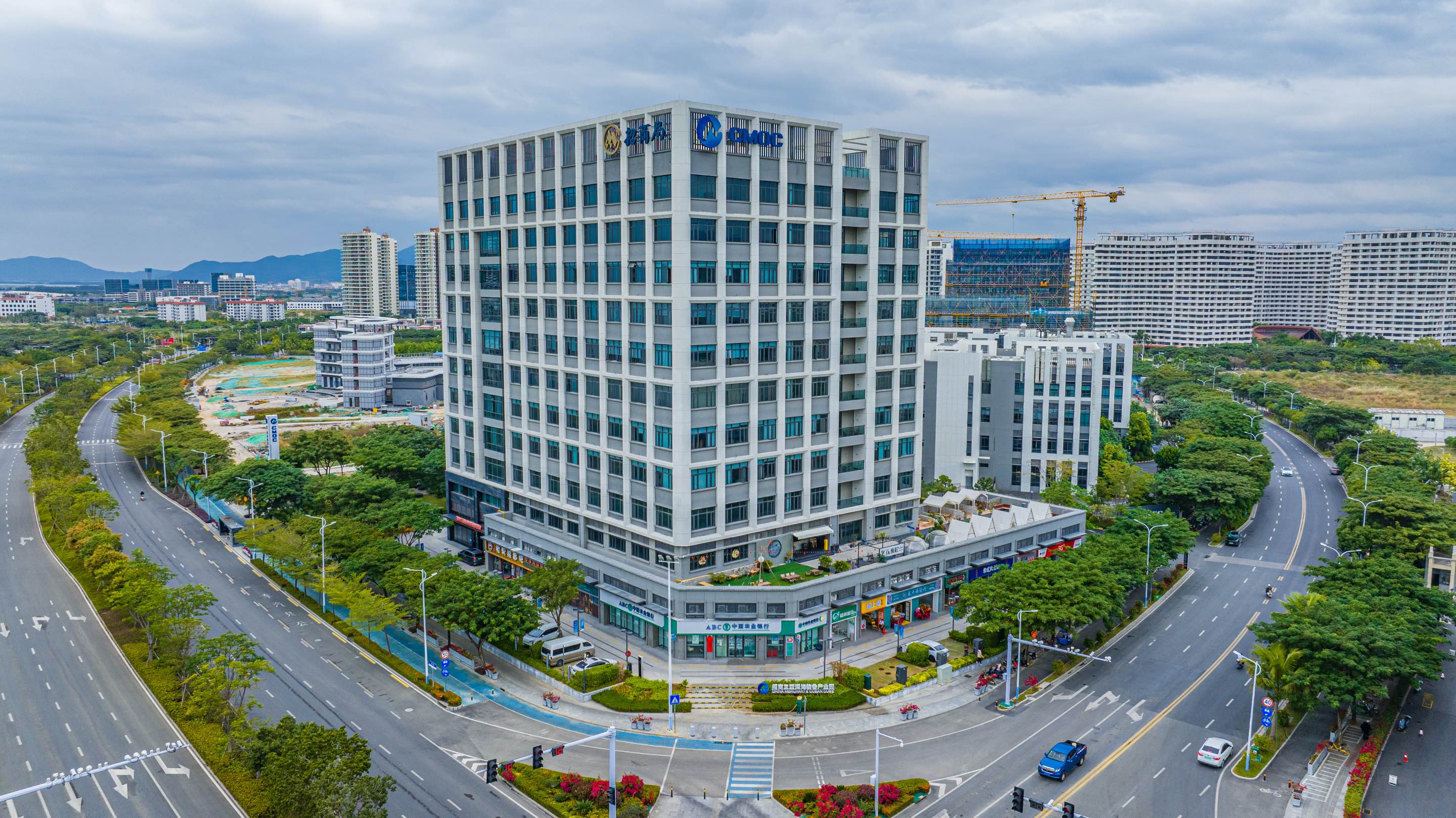
Pelagix AUV is the autonomous underwater vehicle line developed by Sanya Poseidon Ocean Technology Co., Ltd., a deep-sea intelligent equipment enterprise located in the Yazhou Bay Deep-Sea Equipment Industrial Park in Sanya, Hainan Province, China. The company integrates R&D, manufacturing, sales and technical services for AUVs, ROVs, core underwater components and marine software systems, and delivers complete unmanned underwater systems and integrated solutions to domestic research institutes, engineering enterprises and international markets. Its product range is used below as the reference case because it spans portable micro platforms through 6000 m deep-sea platforms.
This framework is written for buyers at the decision-to-execution stage: survey contractors, offshore operators, research institutes and fleet managers who have already shortlisted platforms and now need to confirm what they are buying, how it will be accepted at handover, and what it will cost to operate over the life of the fleet.
Problem Definition: Where AUV Supplier Evaluations Break Down
Most AUV procurement problems are not caused by mission performance. They are caused by gaps in the evidence trail between the specification sheet and the acceptance test. Six failure points recur.
- Unsupported depth ratings. A 6000 m figure in a brochure is a design intent. Without a vacuum leak test record and a hyperbaric chamber test at 1.25× rated working depth, the buyer has no way to distinguish a validated hull from a claimed one.
- Portfolio gaps. When a supplier covers only one depth class, buyers end up running multiple vendors, which fragments spare parts, training, maintenance procedures and data formats across the fleet.
- Non-modular architectures. On a fixed-payload AUV, a new mission requirement means re-engineering or a new platform instead of a payload change.
- Undocumented corrosion control. Hard anodizing, titanium components, anti-fouling coatings, sacrificial anode protection and pre-shipment seawater immersion testing determine whether components survive long-term immersion or are replaced prematurely.
- Endurance treated as a single number. Energy storage accounts for approximately 40% of an AUV's internal volume, and missions typically last up to 24 hours, according to Market.us market analysis. Extending endurance therefore changes hull volume, weight and buoyancy — unless the platform is designed to be reconfigured.
- Undefined acceptance criteria. If factory and sea-trial acceptance gates are not written into the contract, disputes surface during the sea trial, when the vehicle is already built.
Each of these points is commercial rather than technical. Together they determine reconfiguration cost, unplanned downtime and total cost of ownership across a fleet's service life.
Industry Background: A Deep-Sea Market Moving Toward Verifiable Specifications
The global autonomous underwater vehicle market was estimated at approximately USD 2.0–2.57 billion for 2024/2025 by MarketsandMarkets. Growth is not evenly distributed: the large and deep AUV segment, defined as platforms rated deeper than 1000 m, is projected to grow at a CAGR of 12.0% according to Fortune Business Insights. That is the segment in which depth-class evidence, material specifications and acceptance documentation carry the most commercial weight.
Two structural factors explain why supplier evaluation has become more demanding. First, energy storage accounts for approximately 40% of an AUV's internal volume, with typical missions lasting up to 24 hours (Market.us). Endurance is therefore a design constraint rather than a simple battery upgrade. Second, autonomous safety and functionality are increasingly evaluated through ISO 21448 (SOTIF) frameworks, which address non-fault-based hazards in marine robotics — a shift that pushes buyers toward documented autonomy behaviour instead of general performance claims.
Procurement logistics also matter. AUVs are typically classified under HS Code 901580 (oceanographic and hydrological instruments) or 890690 (other vessels), according to a US Customs and Border Protection ruling. Buyers planning import should align classification and documentation before the factory acceptance test, not after shipment.
The supply side includes established international manufacturers and newer deep-sea specialists. Kongsberg Maritime reported 2025 revenue of approximately NOK 24.2 billion (USD 2.3 billion), with its HUGIN AUV portfolio contributing significantly to an estimated 15–20% share of advanced ocean systems. Buyers comparing suppliers on this basis should apply the same verification criteria to every candidate, regardless of brand size.
The Six-Dimension AUV Supplier Evaluation Framework
Six dimensions cover the gap between a quotation and a delivered, accepted vehicle. Each should be documented by the supplier before the purchase order is issued.
1. Portfolio Breadth: Does One Supplier Cover Every Depth Class You Operate In?
Portfolio breadth determines whether a buyer can standardise on one supplier across shallow, nearshore and deep-sea work. The Pelagix AUV range is organised by operating class: the AUV-150 and AUV-160 portable micro AUVs for portable and small-platform deployments; the AUV-210 and AUV-260 nearshore survey AUVs; the AUV-480 streamlined high-stability AUV; the AUV-533, AUV-600 and AUV-900 deep-sea 6000 m AUVs; and the AUV-F760 platform. Alongside the AUV line, Sanya Poseidon Ocean Technology manufactures the ROV-150 and ROV-050 for tethered tasks.
Component supply is part of breadth. The company produces high-efficiency underwater thrusters, CTD sensors, an ocean electromagnetic coupling module, an underwater combination antenna and deep-sea waterproof packets, and develops marine software including a marine unmanned platform simulation training system, a multi-AUV cooperative detection system and the mesoscale vortex AI forecasting model OceanX-Eddy. In-house component and software supply matters to long-term buyers because it reduces dependence on third-party subsystems for spares and support.
What to request: a complete model list mapped to operating depth class, confirmation that payload interfaces are consistent across classes, and a statement of which components are manufactured in-house.

2. Depth-Rating Evidence: Test Records, Not Specification Claims
A depth rating is only as strong as the test record behind it. For 6000 m platforms, Sanya Poseidon Ocean Technology uses a pressure-rated hull design with a high-strength titanium alloy or composite pressure housing and a double O-ring seal architecture. Quality assurance procedures for the 6000 m AUV pressure hulls include vacuum leak testing and 100% hyperbaric chamber pressure simulation at 1.25× rated working depth — every hull unit is pressure-tested beyond its rated depth rather than sampled from a batch.
Additional evidence items include real-time internal humidity and pressure monitoring telemetry, and an emergency automatic weight-drop surfacing system. The 6000 m / 2000 m pressure-rated hull design and the high-strength titanium alloy or composite pressure housing are the specific engineering responses to extreme hydrostatic pressure and structural leakage risk at depth.
What to request: the pressure hull material declaration, the seal architecture description, the vacuum leak test record, and the hyperbaric chamber report at 1.25× rated working depth for the actual unit being delivered.
3. Hull Materials and Corrosion Control: NACE, Anodes and Immersion Testing
Long-term exposure to seawater corrodes metal components, while marine organisms attach to the hull, sensors and propulsion system, affecting equipment performance and maintenance intervals. The risk increases during long-term or frequent seawater operations, especially in warm, high-salinity or biologically active marine environments.
The material specification to verify includes corrosion-resistant components and seawater-resistant electronics, hard anodized marine aluminum, titanium components and anti-fouling protective coating. Material selection conforms to NACE standards, supported by sacrificial anode protection and a comprehensive seawater immersion test protocol completed prior to shipment. For factory audit support on long-term offshore contracts, these are the reference documents a buyer's technical team should expect to review.
Corrosion control also protects spare parts planning. Long-term supply continuity for deep-sea AUVs is supported by NACE-compliant material selection and the pre-shipment immersion protocol, while spare parts availability for long-term offshore fleets rests on corrosion-resistant component specifications combined with that immersion testing.
What to request: material certificates, the anode schedule, the coating specification, the pre-shipment seawater immersion test report, and the corrosion-resistant component list used for spares planning.
4. Navigation and Autonomy: What a GPS-Denied Suite Has to Prove
Underwater there is no GPS. Positioning errors accumulate across DVL, INS and USBL sensors, and acoustic communication may weaken or disappear because of distance, sea conditions or seabed obstructions. The navigation suite therefore has to be evaluated on fusion architecture and failure behaviour, not on a positioning accuracy headline.
The reference configuration combines AI-assisted autonomous navigation and autonomous SLAM mapping with DVL, INS and USBL fusion, corrected by a multi-sensor Kalman filter algorithm. Failure behaviour is specified: contingency plans include an automatic return-to-home protocol upon acoustic link loss, with monocular vision-guided docking as a fallback.
Obstacle handling is the second half of autonomy. Forward-looking obstacle-avoidance sonar is combined with an entanglement identification software algorithm. When a potential entanglement with nets, cables or pipeline structures is detected, the system triggers a visual alert and activates the emergency cut-and-clear system or deploys an acoustic drop weight.
What to request: a navigation suite block diagram, the sensor fusion and filter logic, a written statement of vehicle behaviour on acoustic link loss, and the entanglement detection and recovery sequence.
5. Custom Build Evidence: Modular Payloads, Changeover Time and Endurance Configuration
Custom build capability is where a supplier's engineering claim is easiest to test. The Pelagix AUV architecture is modular: it supports flexible payload configurations, rapid mission reconfiguration, and simplified maintenance and upgrades. Compared with a standard non-modular AUV, this architecture supports 3–5× more payload configurations, enables payload changeover in under 30 minutes, reduces mission reconfiguration time by 50–70%, and shortens maintenance and upgrade cycles by 30–50%. Lifecycle costs can be 20–40% lower, partly because modular integration lowers payload replacement costs and extends platform service life through flexible system upgrades.
Propulsion and endurance are linked. The high-thrust thruster design delivers 35% higher hydrodynamic propulsive efficiency and 40% longer battery endurance per operational dive. Custom endurance configurations can be specified against the mission profile, extending to 50 hours or 300 km for long-endurance and long-range survey work. Because energy storage occupies roughly 40% of internal volume on typical AUVs and standard missions run up to about 24 hours, buyers should ask how an endurance extension is achieved — battery configuration, hull volume, weight and buoyancy compensation — and should require a documented endurance test plan rather than accepting a single figure.
What to request: the payload interface specification, a changeover procedure with timing, the basis for maintenance and upgrade cycle reductions, and an endurance configuration sheet with the corresponding test plan.
6. Purchasing Terms and Acceptance Criteria as Delivery Assurance
Commercial terms are part of the technical evaluation because they define when the supplier has actually delivered. For AUV platforms, ROVs and customized payload systems, the minimum order quantity is one unit, which allows a single customized platform to be ordered for validation before fleet-scale procurement.
Delivery terms available are FOB Sanya, EXW Factory, CIF Destination Port, and DDP with Sea-Trial Handover Support. Acceptance is staged: a Factory Acceptance Test (FAT) that includes the hyperbaric pressure chamber test, followed by a Site Acceptance Test (SAT) with sea-trial validation and verification of survey-grade mapping documentation produced by the vehicle.
Payment terms follow the same staging logic: 30% T/T advance deposit upon contract signing, 50% upon factory completion and FAT approval, and 20% against sea-trial SAT clearance or a B/L copy. L/C is negotiable for institutional clients. Structuring payment around the acceptance gates keeps the buyer's exposure aligned with verified performance.
Step-by-Step Breakdown: A Seven-Step Evaluation Workflow
- Define the mission envelope. Specify maximum operating depth, required endurance in hours and kilometres, the payload list, the operating environment (salinity, biofouling pressure, currents) and the final data deliverable, including whether survey-grade mapping documentation is part of acceptance.
- Map the portfolio to the envelope. Match candidate models to the envelope: AUV-150 and AUV-160 portable micro platforms for transportable deployments; AUV-210 and AUV-260 for nearshore survey; AUV-480 for streamlined, high-stability runs; AUV-533, AUV-600 and AUV-900 for 6000 m deep-sea missions.
- Request the depth-rating evidence pack. Ask for the pressure hull material, the seal architecture, the vacuum leak test record and the hyperbaric chamber report at 1.25× rated working depth, and confirm that testing applies to 100% of hull units.
- Audit material and corrosion documentation. Review NACE-compliant material selection, sacrificial anode protection, the anti-fouling coating specification and the pre-shipment seawater immersion test protocol.
- Validate the navigation and autonomy suite. Confirm the DVL, INS and USBL fusion configuration and Kalman filter logic, the return-to-home behaviour on acoustic link loss, and the obstacle-avoidance plus entanglement detection and cut-and-clear sequence.
- Verify custom build capability. Check the payload interface, the documented changeover time, reconfiguration and maintenance cycle reductions, propulsion data, and the endurance configuration together with its test plan.
- Confirm commercial terms, acceptance gates and long-term support. Fix the MOQ, delivery term, FAT and SAT criteria and the staged payment schedule, then agree the spare parts, material continuity and factory audit documentation that will support the platform over its service life.
Use Cases: Matching Depth Class and Configuration to Mission Type
The mission profile determines which depth class and configuration a buyer should be evaluating.
- 6000 m abyssal exploration and scientific survey. The AUV-533, AUV-600 and AUV-900 deep-sea 6000 m platforms address extreme-hydrostatic-pressure missions where hull material, seal architecture and hyperbaric test records are decisive.
- Offshore oil and gas pipeline inspection and subsea infrastructure inspection. Where fishing nets, cables and pipeline structures create entanglement risk, forward-looking obstacle-avoidance sonar and the entanglement detection algorithm with cut-and-clear or acoustic drop-weight recovery are the relevant capabilities.
- Cable route survey and long-range ocean environmental monitoring. Tetherless operation supports autonomous survey missions in the 10–100+ km range, which is difficult to match with a tethered vehicle.
- Hydrographic survey and seabed mapping. Modular payload reconfiguration allows the same platform to be switched between mission-specific sensor combinations in under 30 minutes, so one vehicle can cover multiple mission types per campaign.
- Offshore wind farm survey and O&M support. Recurring inspection missions benefit from rapid reconfiguration and from a portfolio that lets shallow and deep assets be covered by one supplier.
- Marine environmental monitoring and oceanographic research. CTD sensors and other in-house components support environmental data collection, while the multi-AUV cooperative detection system supports multi-vehicle operations.
Comparison Table: Modular AUV, Non-Modular AUV and Tethered ROV
The table compares the published characteristics of a modular AUV platform against a standard non-modular AUV and a traditional tethered ROV. All figures are drawn from the supplier's published comparison data.
| Evaluation dimension | Modular AUV (Pelagix AUV) | Standard non-modular AUV | Traditional tethered ROV |
|---|---|---|---|
| Architecture | Modular architecture; flexible payload configurations; rapid mission reconfiguration; simplified maintenance and upgrades | Fixed payload configuration; reconfiguration limited without re-engineering | Tethered, surface-controlled platform |
| Payload configuration options | 3–5× more payload configurations than a standard non-modular AUV | Baseline configuration | Constrained by tether handling and surface equipment |
| Payload changeover | Under 30 minutes | Baseline (no documented rapid changeover) | Requires recovery and deck handling |
| Mission reconfiguration time | 50–70% reduction | Baseline | Reconfiguration tied to surface support |
| Survey coverage efficiency | 3–5× higher coverage efficiency than a tethered ROV; supports 10–100+ km autonomous survey missions | Autonomous operation | Lower coverage efficiency; vessel operating time 30–50% higher |
| Surface support and crew | Up to 80% reduction in surface operator and tether-management requirements; 70% fewer onboard crew than tethered ROV operations | Autonomous operation | Full operator involvement and tether management |
| Lifecycle cost | 20–40% lower lifecycle cost than non-modular; 3-year total cost of ownership 45% lower than tethered ROV | Baseline | Higher total cost of ownership |
| Maintenance and upgrades | 30–50% less maintenance time and 30–50% shorter maintenance and upgrade cycles than non-modular | Baseline | Umbilical inspection and repair overhead |
| Best-fit missions | Hydrographic surveying, geophysical exploration, seabed mapping, pipeline inspection, offshore energy, environmental monitoring, marine research | Single-configuration survey roles | Station-keeping inspection and intervention tasks |
FAQ: AUV Supplier Evaluation, Depth Ratings and Long-Term Supply
What acceptance criteria should be written into a deep-sea AUV contract?
Acceptance should be staged across a Factory Acceptance Test (FAT) and a Site Acceptance Test (SAT). For a 6000 m-rated platform, the FAT includes a hyperbaric pressure chamber test, and the SAT includes sea-trial validation plus verification of the survey-grade mapping documentation delivered by the vehicle. Payment is normally tied to those gates: 30% T/T advance deposit upon contract signing, 50% upon factory completion and FAT approval, and 20% against sea-trial SAT clearance or a B/L copy, with L/C negotiable for institutional clients.
How can a buyer verify a 6000 m depth rating, navigation suite and hull material before purchase?
Verification has three parts. For depth, review the pressure-rated hull design (6000 m / 2000 m), the high-strength titanium alloy or composite pressure housing, the double O-ring seal architecture, the vacuum leak test record and the hyperbaric chamber test at 1.25× rated working depth, which is applied to 100% of hull units. For navigation, review the AI-assisted autonomous navigation and SLAM configuration with DVL, INS and USBL fusion, the multi-sensor Kalman filter, the automatic return-to-home protocol on acoustic link loss, and monocular vision-guided docking as a fallback. For material, review hard anodized marine aluminum, titanium components, anti-fouling coating, NACE-compliant material selection, sacrificial anode protection and the pre-shipment seawater immersion test protocol.
What are the purchasing terms and payment schedule for an AUV platform?
The minimum order quantity is one unit for AUV platforms, ROVs or customized payload systems. Delivery terms are FOB Sanya, EXW Factory, CIF Destination Port, or DDP with Sea-Trial Handover Support. Payment follows the acceptance stages: 30% T/T advance deposit upon contract signing, 50% upon factory completion and FAT approval, and 20% against sea-trial SAT clearance or a B/L copy, with L/C negotiable for institutional clients.
Can a single unit be used to validate a custom configuration before a fleet purchase?
Yes — because the minimum order quantity is one unit for AUV platforms, ROVs and customized payload systems, a single customized platform can be ordered as a validation build. Validation then runs through the staged acceptance path: the FAT with the hyperbaric pressure chamber test, followed by the SAT with sea-trial validation and survey-grade mapping documentation verification. The modular architecture supports this approach because payload changeover takes under 30 minutes and the platform supports 3–5× more payload configurations than a standard non-modular AUV, so a validated platform can be reconfigured between mission types rather than replaced.
What should buyers look for in long-term China AUV suppliers for 6000 m survey missions?
Long-term supply depends on documentation that outlives the initial purchase. Look for NACE-compliant material selection for corrosion-resistant components, sacrificial anode protection and a comprehensive seawater immersion test protocol prior to shipment, because these support long-term supply continuity for deep-sea AUVs. Corrosion-resistant component specifications and pre-shipment immersion testing also support spare parts availability for long-term offshore fleets, and factory audit support for long-term offshore contracts can reference the same material and testing records. Beyond documentation, verify that the supplier provides complete unmanned underwater systems and integrated solutions that support recurring offshore survey and inspection missions, and that it offers custom engineering and technical services for long-term underwater equipment projects. A practical next step is to request the AUV product catalog and a configuration review with the manufacturer before finalising the shortlist.
Conclusion: What a Completed Evaluation Should Produce
A verified AUV supplier evaluation should leave the buyer with five documents: a portfolio map confirming that every operating depth class is covered by one supplier; a depth-rating evidence pack containing vacuum leak and hyperbaric test records at 1.25× rated working depth; a material and corrosion-control declaration covering NACE-compliant material selection, sacrificial anode protection, anti-fouling coating and pre-shipment immersion testing; a navigation and autonomy specification that states fusion architecture and failure behaviour; and a commercial schedule that ties payment to FAT and SAT acceptance.
With those five items in place, the remaining decisions — payload configuration, endurance profile, spare parts planning and long-term support — can be negotiated against documented facts rather than assumptions. For buyers evaluating deep-sea capability up to 6000 m, that difference determines whether the platform meets the mission on delivery or requires renegotiation after the sea trial.
Next Step: Sample, Configuration Review and Quotation
Sanya Poseidon Ocean Technology Co., Ltd. supplies the Pelagix AUV range, ROV platforms and customized payload systems, and provides custom engineering and technical services to support long-term underwater equipment projects. Buyers can request a configuration review, discuss a sample arrangement, or request a quotation against a defined mission envelope.
Download the AUV product catalog: Overseas Version – AUVs Products (PDF)
Website: https://www.pelagix-tech.com/ · Email: pelagixtech@gmail.com · Tel / WhatsApp: +86 153-7674-8180 / +86 178-5200-3001 · Start a WhatsApp inquiry
Address: K506, 5th Floor, Building A, Yazhou Bay Deep-Sea Equipment Industrial Park, Yazhou District, Sanya City, Hainan Province, China.
Have Questions or Need More Details?
Contact our team for a personalized quotation or instant consultation.
Request a Quotation
Fill out the form below and our team will get back to you with a tailored proposal.
WhatsApp Direct Chat
Prefer to chat in real-time? Message us on WhatsApp for instant assistance & quick answers.
- Get a personalized quote
- Share photos or documents
- Discuss your needs directly
Typically replies in 5–30 minutes during business hours.