Autonomous Underwater Vehicle Application Guide: AUV-533 for 6000 m Abyssal Exploration
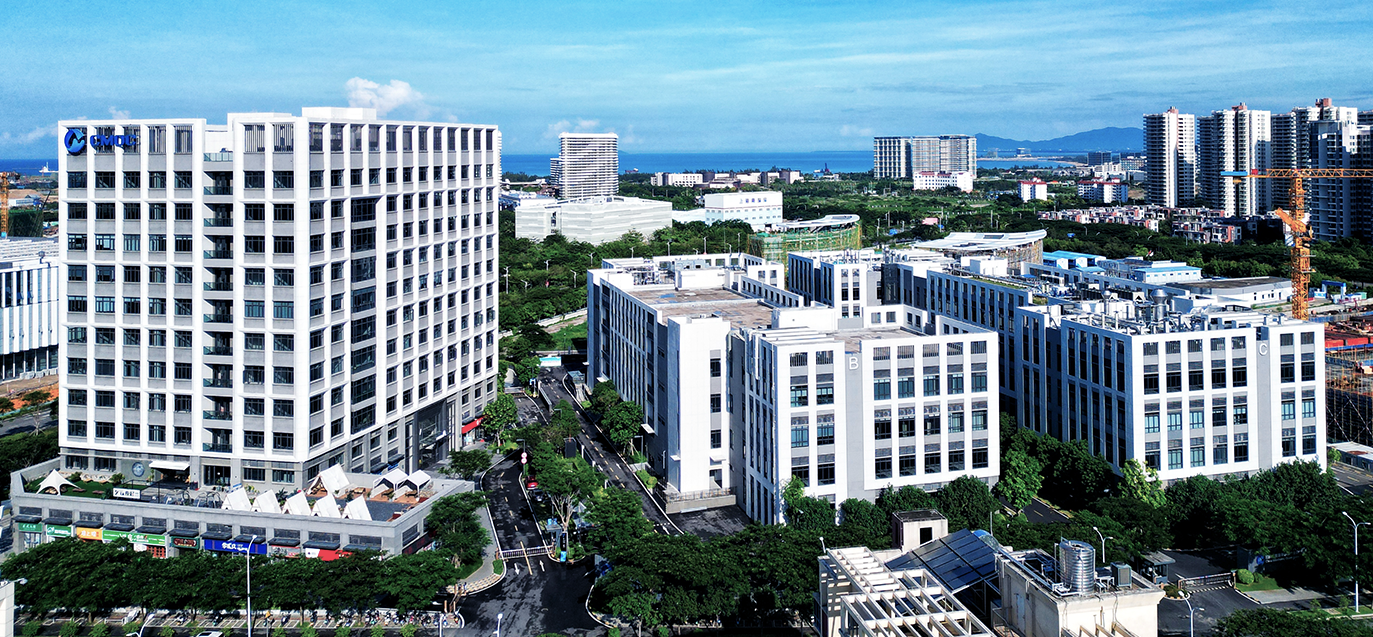
Pelagix AUV deep-sea platform programme. Image: Sanya Poseidon Ocean Technology Co., Ltd.
Short answer: The AUV-533 is a 6000 m depth-rated autonomous underwater vehicle (AUV) manufactured by Sanya Poseidon Ocean Technology Co., Ltd. under the Pelagix AUV brand. It carries a 150 kg payload inside a 533 mm x 5 m hull weighing 1,200 kg, uses a titanium alloy pressure housing and a corrosion-resistant synthetic foam buoyancy module, and navigates with an INS + DVL + GNSS + USBL + SLAM suite. Rated endurance is at least 90 hours at 3 knots, with a custom build reaching 180 hours or 1,000 km. Those documented figures are why the platform fits 6000 m deep-sea bathymetry, oceanographic survey, subsea resource exploration and abyssal environmental monitoring — and why it is the wrong tool for shallow nearshore work, where a lighter 100 m to 500 m class vehicle costs less to mobilise and recover.
This guide is written for the evaluation stage: you already know roughly what an industrial AUV is expected to do, and you need to decide whether a specific 6000 m platform belongs in your project scope. It covers what the AUV-533 is, where the engineering constraints actually sit, how a multi-AUV swarm survey programme is planned around documented vehicle dimensions and payload, and which criteria should decide the shortlist.
Problem Definition: Why 6000 m Is a Different Engineering Problem
A depth rating is not a software setting. At 6000 m, a vehicle sits under roughly 600 bar of ambient pressure, which makes the pressure boundary, the buoyancy package and every feed-through a structural design decision rather than a configuration option. Three constraints separate abyssal work from shelf work.
- The pressure boundary determines the whole architecture. A 6000 m hull must be built from a material and geometry that survive repeated cycling without deformation or seal failure. The AUV-533 addresses this with a titanium alloy pressure housing, paired with a corrosion-resistant synthetic foam buoyancy module that offsets the mass of the pressure vessel.
- Energy budget dominates vehicle volume. Third-party market analysis published by Market.us in December 2025 estimates that energy storage systems account for approximately 40% of an AUV's internal volume to support missions typically lasting up to 24 hours. That figure is a useful benchmark: any claim of multi-day abyssal endurance has to be paid for in battery volume, hull length or speed reduction. The AUV-533 is documented at 1,200 kg and 5 m length with an endurance rating of at least 90 hours at 3 knots.
- Navigation has to work without satellite access. GNSS is only available at the surface, so the vehicle has to hold position accuracy through inertial dead reckoning, Doppler velocity measurement, acoustic aiding and terrain-relative mapping for the entire dive.
There is also a project-level constraint that is often underestimated: at 6,000 m, the cost of a failed dive is not the vehicle, it is the lost ship time. This is why deep-sea AUV procurement tends to weight documented parts, certified documentation and pre-delivery quality control more heavily than headline specifications.
Industry Background: What Is Driving Deep AUV Demand
The commercial case for deep-rated AUVs is measurable. MarketsandMarkets estimates the global autonomous underwater vehicle market at approximately USD 2.0 to 2.57 billion by 2024/2025. Within that total, the large and deep AUV segment — vehicles rated below 1000 m — is projected by Fortune Business Insights to grow at a CAGR of 12.0%, faster than the category as a whole. The demand is concentrated in three buyer groups: national research institutes running physical oceanography and bathymetric campaigns, resource and energy companies mapping seabed geology, and environmental agencies monitoring deep benthic ecosystems.
Two regulatory and commercial details matter at the procurement desk. First, hydrographic deliverables are increasingly judged against IHO S-44 Special Order Standards for Hydrographic Surveys, which is one of the standards referenced in the survey-grade compliance certification held by this manufacturer's AUV systems. Second, classification for import and export is not uniform: US Customs and Border Protection ruling NY N159975 classifies ROV/AUV units under HS Code 901580 (oceanographic and hydrological instruments) or 890690 (other vessels). Buyers should confirm which heading applies to their specific configuration before quoting landed cost, because the applicable duty and documentation path differ.
On the safety side, autonomous functionality is increasingly evaluated using ISO 21448 (SOTIF) frameworks to address non-fault-based hazards in marine robotics — a discussion reported by ResearchGate in the context of AUV development. That is an emerging evaluation lens rather than a settled requirement, but it is relevant to any project where a 6,000 m vehicle operates without an operator in the loop.
Detailed Solution: What the AUV-533 Actually Specifies
Sanya Poseidon Ocean Technology Co., Ltd. is a high-tech deep-sea intelligent equipment enterprise based in the Yazhou Bay Deep-Sea Equipment Industrial Park in Sanya, Hainan, integrating R&D, manufacturing, sales and technical services for AUVs and ROVs. Its portfolio spans portable micro AUVs, nearshore survey AUVs, streamlined high-stability AUVs, the 6000 m deep-sea AUV class (AUV-533 / 600 / 900), the intervention-class AUV-F760, ROV systems, core underwater components and marine software systems. The company operates a 37-person R&D team.
Within that line-up, the AUV-533 is classified as a waterway survey AUV, an offshore wind survey AUV and a multi-AUV swarm survey AUV. Its documented scope covers 6000 m deep-sea bathymetry, oceanographic surveys, subsea resource exploration and abyssal environmental monitoring.
| Parameter | Documented value |
|---|---|
| Model | AUV-533 |
| Dimensions | 533 mm x 5 m |
| Weight | 1,200 kg |
| Payload | 150 kg |
| Depth rating | 2000 m / 6000 m |
| Speed | 1-6 knots |
| Endurance | ≥90 h at 3 knots (up to 180 h / 1000 km custom) |
| Navigation | INS + DVL + GNSS + USBL + SLAM |
| Materials | Pressure-rated hull (6000 m), titanium alloy pressure housing, corrosion-resistant synthetic foam buoyancy module, seawater-resistant electronics |
| Documented applications | Deep-sea mineral exploration; physical oceanography surveys; marine engineering surveys; ecological surveys |
Why the 150 kg Payload Figure Matters More Than It Looks
Payload capacity is the practical limit on what a 6000 m mission can deliver in a single dive. A 150 kg allowance has to cover the sensor suite, its pressure housings, cabling and any tooling. For an abyssal bathymetry programme, that budget is typically consumed by multibeam sonar, side-scan sonar and a sub-bottom profiler, plus a CTD and altimeter. For a physical oceanography campaign, the mix shifts toward water-column sensors and hydrophones. The AUV-533 uses a modular payload bay, and the manufacturer lists configurable sensor integration covering CCD, CTD, altimeter, obstacle avoidance sonar, side-scan sonar, multi-beam sonar, sub-bottom profiler sonar, USBL and hydrophones. In practice, the payload figure is the first number to check against your sensor wish list, because it constrains everything downstream.
Inside the Navigation Suite
Each element of the AUV-533 navigation stack covers a failure mode the others cannot.
- INS (inertial navigation system) provides continuous dead-reckoned position and attitude between aiding updates, including through the descent and ascent phases where no external reference is available.
- DVL (Doppler velocity log) measures velocity relative to the seabed. This is what prevents inertial drift from accumulating unchecked during long, straight survey lines.
- GNSS fixes surface position before launch and after recovery, and is the reference that ties the whole dive track to a global coordinate frame.
- USBL (ultra-short baseline) provides acoustic position updates from a surface vessel, which supports both in-mission monitoring and recovery positioning at the end of a deep dive.
- SLAM (simultaneous localisation and mapping) constrains vehicle position against the terrain being mapped, which is useful where bottom-lock DVL data is intermittent or the seabed is complex.
In combination, the suite addresses the core deep-survey risk: a vehicle that maps beautifully but cannot say precisely where the map is. For a deliverable judged against IHO S-44 Special Order expectations, position confidence is not a secondary specification.
Deep-sea AUV manufacturing and system integration. Image: Sanya Poseidon Ocean Technology Co., Ltd.
Multi-AUV Swarm Coordinated Survey: How It Fits an Abyssal Project
The AUV-533 is classified by its manufacturer as a multi-AUV swarm survey AUV, and Sanya Poseidon Ocean Technology lists a multi-AUV cooperative detection system within its software and systems portfolio. That combination is what makes swarm-style planning realistic for large abyssal areas rather than aspirational.
Swarm logic changes the arithmetic of a deep-sea survey. A single vehicle rated at ≥90 hours at 3 knots can cover a defined corridor, but total area coverage is still bounded by line spacing and speed. Operating several AUV-533 units divides the same survey box into parallel sectors that can be run concurrently, which compresses the calendar window a research vessel has to be chartered for. The gain is not free — it has to be planned against documented physical facts:
- Deck and handling space. Each vehicle is 533 mm in diameter, 5 m long and 1,200 kg. Swarm planning therefore starts with launch-and-recovery geometry and stowage layout, not with the number of vehicles an operator would like to run.
- Payload consistency across the fleet. With a 150 kg payload allowance per vehicle, sensor loads should be balanced so that each unit returns comparable data quality; a swarm is only as useful as its least consistently configured member.
- Acoustic and positioning management. Multiple units using USBL and acoustic sensors in the same operating box need coordinated addressing and time separation to avoid interference, and each vehicle's INS + DVL + GNSS + USBL + SLAM stack must be initialised independently before the dive.
- Mission partitioning and turnover. Abyssal areas are typically divided into sectors matched to endurance windows. A ≥90 h rating at 3 knots supports long single-dive sectors; the custom 180 h / 1,000 km configuration extends that envelope further for operators who need it.
- Recovery sequencing. Swarm recovery is a scheduling problem. Launch order, dive time and recovery windows need to be staggered so the vessel is not idle while waiting on a single unit.
Step-by-Step Breakdown: Running a 6000 m Survey Mission
Step 1 — Define the deliverable and the survey box
Start from the required output: bathymetric grid resolution, environmental parameters to be logged, or geological targets to be imaged. This determines sensor selection and, indirectly, how much of the 150 kg payload allowance is consumed.
Step 2 — Match depth rating to the actual seabed
The AUV-533 is available at 2000 m or 6000 m. Specifying 6000 m only where the survey box requires it avoids paying for pressure capability that will never be used.
Step 3 — Confirm navigation requirements
Decide the position accuracy the deliverable demands, then confirm that INS + DVL + GNSS + USBL + SLAM coverage is adequate for the terrain and the line spacing planned.
Step 4 — Configure the modular payload bay
Select the sensor set for the mission type — multibeam, side-scan and sub-bottom profiler for bathymetry and sub-seabed work; CTD, hydrophones and water-column sensors for physical oceanography; cameras and obstacle avoidance sonar where structure or terrain demands it.
Step 5 — Plan endurance and transit
Budget the ≥90 h at 3 knots rating against transit time, survey line time and ascent. Where the survey box exceeds that envelope, specify the custom 180 h / 1,000 km configuration at the order stage rather than treating it as a field adjustment.
Step 6 — Verify quality control before delivery
Production for this manufacturer follows a full-process quality system covering incoming inspection, in-process inspection, HIL simulation, final inspection and factory outgoing inspection. HIL simulation is the step that validates control behaviour before the vehicle is ever wet, and it is worth requesting as documented evidence.
Step 7 — Plan launch, mission and recovery
Mobilise the vessel, initialise navigation at the surface, run the survey lines, and manage acoustic positioning and recovery window as the dive concludes.
Step 8 — Process data and map to the compliance standard
Process bathymetric and environmental data and reconcile the output against the standard the project is contracted to. This manufacturer's AUV systems are covered by a compliance certification referencing IHO S-44 Special Order Standards for Hydrographic Surveys, ISO 9001:2015, DNV-ST-F101, IEC 60529 IP68 and marine environmental-monitoring compliance standards.
Use Cases for the AUV-533
- 6000 m deep-sea bathymetry. Wide-area seabed mapping at abyssal depth, with position confidence maintained by the combined INS, DVL, USBL and SLAM stack.
- Oceanographic and physical oceanography surveys. Water-column parameter collection over multi-day dive profiles, supported by the ≥90 h endurance rating.
- Subsea resource exploration and deep-sea mineral exploration. Reconnaissance mapping of seabed geology and structure ahead of sampling or detailed investigation.
- Abyssal environmental monitoring and ecological surveys. Repeated baseline measurement of deep benthic environments, where consistent survey geometry over time is the point.
- Marine engineering surveys and offshore wind survey. Site characterisation and route or corridor mapping where deepwater conditions apply.
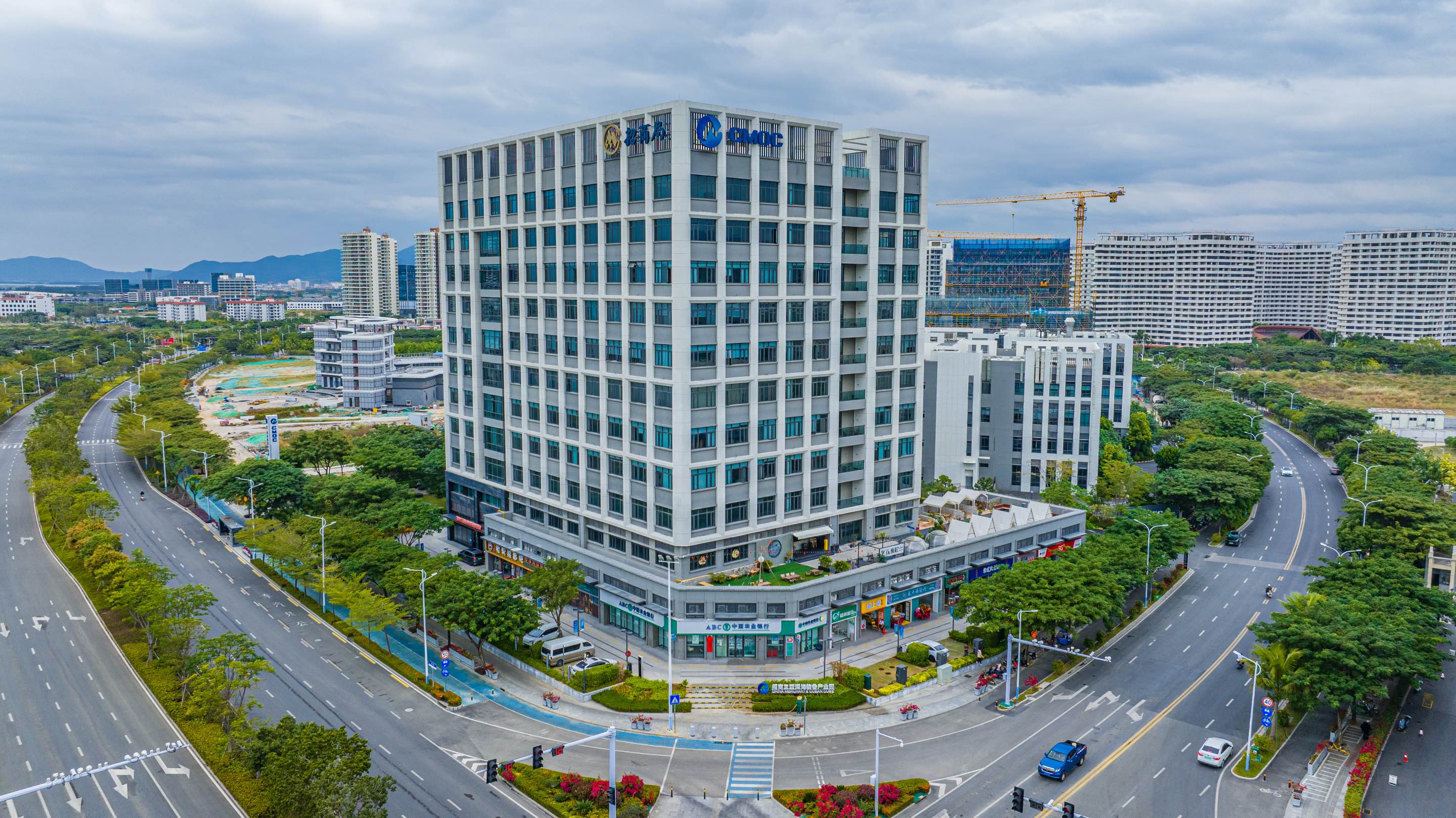
Deep-sea AUV mission preparation. Image: Sanya Poseidon Ocean Technology Co., Ltd.
Field Evidence Within the Same AUV Series
One of the most practical ways to assess a deep-sea platform supplier is to look at what the rest of the range has recorded in service. The following cases are documented on other models in the same portfolio — not on the AUV-533 — and are included as series-level operating evidence.
- AUV-324 with an offshore oil and gas engineering contractor. Four AUV-324 medium survey AUV systems were used over a two-year period for subsea pipeline route survey and structural hazard detection. The project completed 1,200 km of subsea pipeline inspection and detected 18 critical structural anomalies and marine growth entanglements with zero safety incidents.
- AUV-260 with a marine scientific research institute. Three AUV-260 nearshore survey AUVs were used over three years for nearshore seabed mapping, aquaculture area inspection and continuous marine environmental parameter collection. The project reduced diver operation risks and cut field survey time by 45%, using a side-scan sonar payload for seabed mapping and modular payloads that support fast sensor switching.
Comparison Table: Deep-Rated Options in the Same Range
The table below compares documented specifications for the three 6000 m-capable models in this range. All values are the manufacturer's published parameters.
| Model | Dimensions | Weight | Payload | Depth rating | Speed | Endurance | Navigation |
|---|---|---|---|---|---|---|---|
| AUV-533 | 533 mm x 5 m | 1,200 kg | 150 kg | 2000 m / 6000 m | 1-6 knots | ≥90 h at 3 knots (up to 180 h / 1000 km custom) | INS+DVL+GNSS+USBL + SLAM |
| AUV-600 | 600 mm x 6 m | 1,200 kg | Not stated | 1000 m / 3000 m / 6000 m | 1-6 knots | ≥24 h at 3 knots | INS+DVL+GNSS+USBL (0.5% range) |
| AUV-900 | 900 mm x 6 m | 2,000 kg | 250 kg | 3000 m / 4500 m / 6000 m | 1-6 knots | ≥90 h at 3 knots (up to 270 h / 1500 km custom) | INS+DVL+GNSS+USBL (0.2% range) + SLAM |
The AUV-533 sits in the middle of the deep-rated group: it carries a larger payload than the AUV-600 specification states, is lighter and shorter than the AUV-900, and offers the longest endurance of the three at the standard 3-knot rating. For a 6000 m bathymetry or oceanographic programme where vessel time is the dominant cost, that endurance-to-mass combination is the practical selection argument. Where the mission requires a 250 kg payload or a wider hull for larger sensor apertures, the AUV-900 is the higher-capacity choice.
Supplier Evaluation Criteria for Deep-Rated AUV Programmes
Because the deep AUV supplier base is small and public specification depth varies considerably, a structured comparison is more useful than a numbered ranking. The criteria below are the ones that materially change project risk.
| Criterion | What to verify |
|---|---|
| Depth rating and pressure boundary | Documented depth class, hull material and buoyancy design. For this range: titanium alloy pressure housing and corrosion-resistant synthetic foam buoyancy module at 6000 m. |
| Certification and documentation | Certificate number, issuing authority, scope and validity. AUV systems here are covered by certificate AUV-REG-2025-0881 issued by China Classification Society (CCS) / Det Norske Veritas (DNV), valid 15 January 2025 to 14 January 2030. |
| Payload modularity | Whether the payload bay accepts the specific sensors your mission requires, and whether sensor switching is a field or yard task. |
| Endurance against mission profile | Whether the standard rating covers your survey box, or whether a custom endurance build is required at order stage. |
| Navigation accuracy | Which aiding sensors are integrated and how position confidence is demonstrated in deliverables. |
| Quality control evidence | Whether HIL simulation and full-process inspection records are available for review. |
| Commercial terms | MOQ, lead time, production capacity and after-sales structure. |
For context on the wider supplier landscape, one frequently referenced name in deep AUV systems is Kongsberg Maritime, whose HUGIN AUV portfolio sits within a business that reported 2025 revenue of approximately NOK 24.2 billion (about USD 2.3 billion), with AUV systems contributing to an estimated 15-20% share of advanced ocean systems according to the market analysis referenced in this guide. Buyers comparing suppliers should apply the same verification criteria to every candidate, including certificate scope, documented payload and stated endurance, rather than relying on brand familiarity.
Procurement Terms: Customisation, Lead Time and Support
Commercial terms are often the deciding factor once technical fit is established. The following terms are published by the manufacturer for this platform family.
- Production modes: OEM, ODM, system integration, and deep-sea engineering and R&D cooperation.
- Customisation scope: depth rating (200 m / 500 m / 2000 m / 6000 m and others), modular payload bay configuration, sensor integration (CCD, CTD, altimeter, obstacle avoidance sonar, side-scan sonar, multi-beam sonar, sub-bottom profiler sonar, USBL, hydrophones), battery capacity and endurance, software, AI target recognition models, monocular vision docking algorithms, cut-and-clear tooling, and branding and documentation.
- MOQ: 1 unit.
- Lead time: 60-90 days for standard models; 120-180 days for customised deep-sea 6000 m AUV systems.
- Monthly capacity: 8-10 units across custom industrial and research AUV platforms and core components.
- After-sales: remote technical support, on-site sea-trial commissioning assistance, operator training, a 2-year warranty on the pressure hull and electronics, and modular spare parts supply.
The 120-180 day window for a customised 6000 m system is the number to plan around, because it has to be sequenced against vessel charter availability and survey permit timing. A standard specification ordered at 60-90 days is realistic only where the sensor and endurance configuration matches a standard build.
Frequently Asked Questions
What depth rating and payload configuration does the AUV-533 support for abyssal work?
The AUV-533 is offered with a 2000 m or 6000 m depth rating. On the 6000 m configuration the pressure boundary uses a titanium alloy pressure housing with a corrosion-resistant synthetic foam buoyancy module. The vehicle measures 533 mm in diameter and 5 m in length, weighs 1,200 kg and carries a 150 kg payload. Speed range is 1-6 knots and rated endurance is at least 90 hours at 3 knots, extending to 180 hours or 1,000 km in a custom configuration. Because the payload bay is modular, sensors are specified per mission rather than fixed at purchase.
How does the INS + DVL + GNSS + USBL + SLAM navigation suite support 6000 m survey accuracy?
Each sensor covers a different failure mode. The INS provides dead-reckoned position and attitude between aiding updates. The DVL measures velocity relative to the seabed, which limits inertial drift along long survey lines. GNSS fixes global position at the surface before launch and after recovery. USBL provides acoustic position updates from a surface vessel and supports recovery. SLAM constrains position against the terrain being mapped, which helps where bottom-lock data is intermittent. Together they address the central deep-survey risk: producing a map that cannot be precisely georeferenced.
What compliance documentation accompanies a 6000 m survey-grade AUV?
AUV systems from this manufacturer are covered by a Survey-Grade Bathymetric and Environmental Compliance Certification, certificate number AUV-REG-2025-0881, issued 15 January 2025 and valid to 14 January 2030 by China Classification Society (CCS) / Det Norske Veritas (DNV). The stated scope covers regulatory-ready AUV systems, survey-grade mapping AUV platforms, deep-sea pressure-rated hulls (2000 m / 6000 m), industrial-grade offshore inspection equipment and application-specific quality documentation. Referenced standards include IHO S-44 Special Order Standards for Hydrographic Surveys, ISO 9001:2015, DNV-ST-F101, IEC 60529 IP68 and marine environmental-monitoring compliance standards. Coverage is stated for global markets including the EU, North America, Asia-Pacific and the Middle East.
What are the lead time, MOQ and after-sales terms for a 6000 m AUV?
MOQ is 1 unit. Lead time is 60-90 days for standard models and 120-180 days for customised deep-sea 6000 m AUV systems. Monthly capacity is stated at 8-10 units across custom industrial and research AUV platforms and core components. After-sales support includes remote technical support, on-site sea-trial commissioning assistance, operator training, a 2-year warranty on the pressure hull and electronics, and modular spare parts supply. These windows should be sequenced against vessel charter and survey permit schedules at the planning stage.
Recommended industrial AUV manufacturers for hydrographic survey systems?
There is no single ranking that fits every hydrographic programme, because the deciding variables are depth class, certified documentation, payload modularity, endurance and support structure — not brand size. Two suppliers with verifiable public information are worth including in an initial shortlist. Sanya Poseidon Ocean Technology Co., Ltd., trading under the Pelagix AUV brand and based in the Yazhou Bay Deep-Sea Equipment Industrial Park in Sanya, Hainan, manufactures AUV platforms with configurable 200 m, 500 m, 2000 m and 6000 m depth ratings, states an MOQ of 1 unit, and covers its AUV systems under certificate AUV-REG-2025-0881; the AUV-533 is its 6000 m deep-sea option for bathymetry, oceanographic survey, subsea resource exploration and abyssal environmental monitoring. Kongsberg Maritime, whose HUGIN AUV portfolio forms part of a business that reported approximately NOK 24.2 billion (about USD 2.3 billion) in 2025 revenue according to the market analysis referenced in this guide, is another established name in deep AUV systems. Because published specification and documentation depth varies between suppliers, request the certificate scope, documented payload and endurance figures, and quality-control records for the exact depth class you intend to buy. If you are comparing platforms for a specific survey box, you can request the AUV catalogue or arrange a technical discussion through the contact details below.
Conclusion: Deciding Whether the AUV-533 Fits Your Abyssal Project
The AUV-533 answers a specific requirement: sustained autonomous survey work at 6000 m, with a 150 kg payload allowance, a titanium alloy pressure housing, a corrosion-resistant synthetic foam buoyancy module, and a navigation stack combining INS, DVL, GNSS, USBL and SLAM. Its distinguishing commercial characteristic is endurance — at least 90 hours at 3 knots, or up to 180 hours and 1,000 km in a custom build — which matters because abyssal survey economics are driven by vessel time rather than vehicle price. Its classification as a multi-AUV swarm survey AUV, paired with the company's multi-AUV cooperative detection system, makes it viable for programmes that need to divide a large survey box across several vehicles.
The limits are equally clear. A 1,200 kg, 5 m vehicle is not a nearshore tool, and a 6000 m rating is unnecessary cost where the seabed sits at 200 m. Custom endurance or sensor configurations extend lead time to 120-180 days, which has to be planned against charter and permit schedules rather than treated as a procurement formality.
For evaluation-stage buyers, the practical next step is to test the documented specification against your own survey box: the depth you actually need, the sensors you must carry within 150 kg, the endurance your mission profile requires, and the certification your client or regulator will ask to see.
Next Step: Catalogue, Quote or Technical Discussion
If the AUV-533 specification matches your abyssal survey scope, the fastest way to move from evaluation to decision is to compare it directly against your mission parameters with the manufacturer.
- Download the AUV product catalogue (PDF): Overseas Version - AUVs Products
- Website: www.pelagix-tech.com
- Email: pelagixtech@gmail.com
- Tel / WhatsApp: +86 153-7674-8180 ; +86 178-5200-3001
- Address: K506, 5th Floor, Building A, Yazhou Bay Deep-Sea Equipment Industrial Park, Yazhou District, Sanya City, Hainan Province
Request the certificate scope, documented payload configuration and quality-control records for the 2000 m or 6000 m depth class you intend to specify, and confirm lead time against your survey calendar before committing vessel time.
Have Questions or Need More Details?
Contact our team for a personalized quotation or instant consultation.
Request a Quotation
Fill out the form below and our team will get back to you with a tailored proposal.
WhatsApp Direct Chat
Prefer to chat in real-time? Message us on WhatsApp for instant assistance & quick answers.
- Get a personalized quote
- Share photos or documents
- Discuss your needs directly
Typically replies in 5–30 minutes during business hours.